Best Day Trips From Boston for 2026
A neighborhood-loyal, unsentimental rundown of the day trips actually worth leaving Boston for, organized by direction and honest about which ones are a stretch.
On a Tuesday morning in October, the northbound lanes past the Zakim back up for a mile while everyone with a lanyard crawls toward the Seaport. I go the other way, past the tank farms in Chelsea, radio off, windows down, headed for a bowl of chowder in a town most of those commuters have never once bothered to visit. There's a fish market I like near the harbor there, no sign to speak of, cash only, and I'll get there before the ferry crowd shows up. That's the entire case for the best day trips from Boston: they aren't secret, they're just inconvenient enough, an hour here, ninety minutes there, that people default to the Seaport instead and call it a day off. This guide skips the version of New England built for tour buses and sticks to towns and coastlines that hold up on a random weekday, not just during foliage season when everyone else has the same idea and the parking lots fill by nine.
Eleven places, sorted by direction, each with an honest note on drive time, train access if it exists, and what to actually do once you're there. A few of these are a genuine haul and I say so. None of them are the Freedom Trail with a rental car.
North Shore and Cape Ann
This is the easiest, most repeatable stretch of coastline out of the city, and the one Bostonians treat worst, either skipping it entirely for Maine or reducing it to a single October afternoon in Salem. That's a shame, because the North Shore holds four or five towns that could each carry a full day on their own, none of them requiring a bridge, a ferry, or a second tank of gas.
Salem
Salem gets flattened into one story every fall, and it's worth visiting in every other month specifically to get away from that story. The Peabody Essex Museum holds one of the best collections on the East Coast, built on the same maritime trade money that built the brick mansions along Chestnut Street, and Salem Maritime National Historic Site tells the harbor's actual history without a single costume in sight. Walk the working waterfront, see the House of the Seven Gables, then eat lunch somewhere that isn't wearing a pointed hat on its sign. Drive time is around 40 minutes on Route 1A, and the MBTA's Newburyport/Rockport Line gets you from North Station in roughly 35 to 40 minutes, no parking required. Nathaniel Hawthorne's family history is tangled up in the witch trials too, which the Custom House and the Hawthorne connections around town make clear if you look past the gift shops. Insider tip: go on a quiet Tuesday in March. You'll get the maritime history, the museum, and the architecture without a single tour group blocking Derby Street, and you'll actually be able to get a table for lunch without a wait.

Marblehead sits close enough to Salem that people bolt it on as an afterthought, which is a mistake, because Marblehead is a genuinely different place. It's a working sailing town with narrow colonial streets laid out before anyone cared whether a car could turn around in them, a harbor full of moorings instead of parking lots, and Fort Sewall at the end of a quiet park with one of the better harbor views on this stretch of coast. Park once near Old Town and walk everything from there. Drive time from Boston runs about 45 minutes; there's no useful commuter rail stop, so this one is a car trip. The town still runs largely on its harbor, with more sailboats on moorings than most towns have cars, and the views from Chandler Hovey Park, out past the candy-striped Marblehead Light, are as good as anything on the North Shore. Insider tip: skip the Fort Sewall parking altogether during peak summer weekends and walk in from the public lot near Crocker Park instead, you'll save twenty minutes of circling.

Rockport and Gloucester
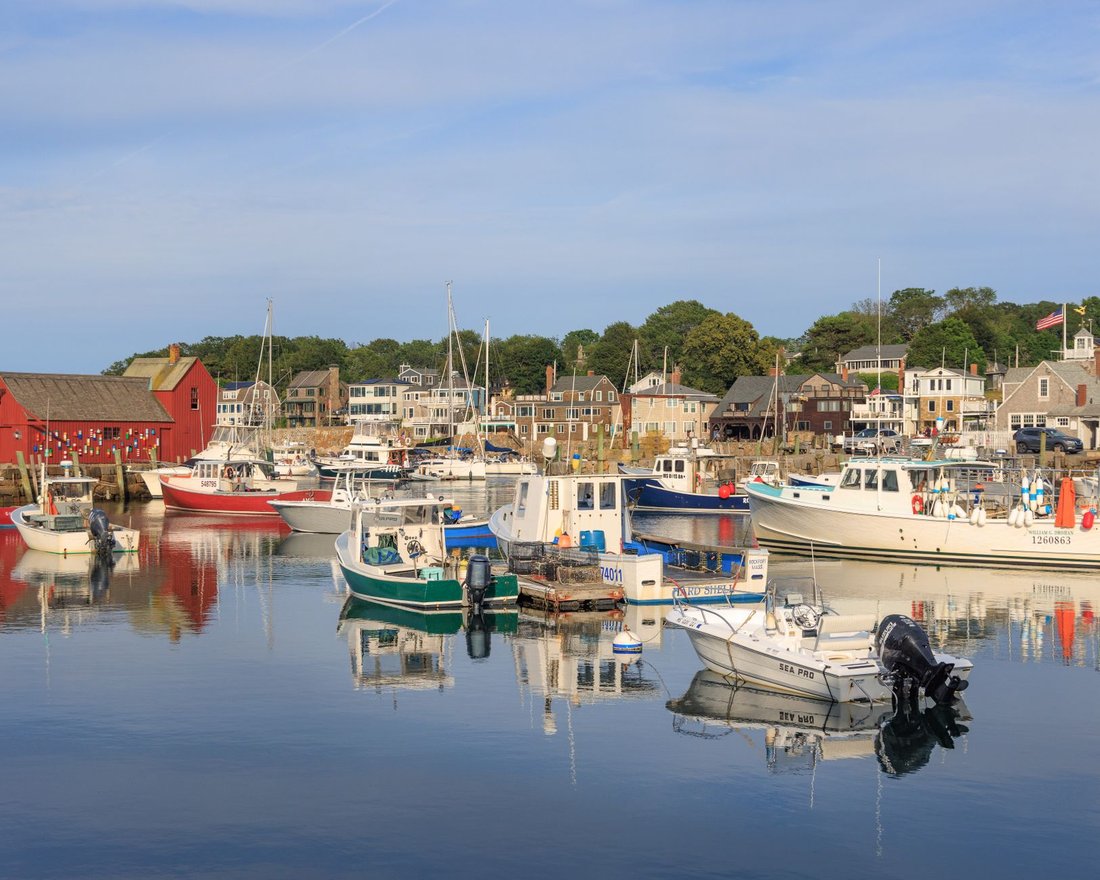
Rockport and Gloucester get lumped together as Cape Ann, but they're not the same town and shouldn't be treated that way. Gloucester is a real, working fishing port, the oldest one in the country, with the Man at the Wheel statue on the harbor honoring the fishermen who didn't come back, and it has the grit that Rockport, its prettier and more shop-heavy neighbor, mostly doesn't. Rockport has Motif No. 1, the red fishing shack that's been photographed and painted more than almost any building in New England, plus Bearskin Neck for lobster rolls and gallery browsing, and Halibut Point State Park at the tip of the cape, where old granite quarries meet open ocean. The MBTA Rockport Line runs to the end of the line in about 70 minutes from North Station, or drive up in about an hour via Route 128. Gloucester's Stage Fort Park is worth a stop too, a working town green with beach access and harbor views that most day-trippers drive straight past on their way to the shops. Insider tip: get off the train in Gloucester first, walk the working waterfront, then take a later train or drive the last ten minutes to Rockport for the postcard shots. Doing it in that order keeps Rockport from feeling like the whole trip, and it gives Gloucester the attention it's earned.
Newburyport and Plum Island
Newburyport is a genuinely handsome old shipbuilding town with a walkable brick downtown, a proper independent bookstore, and a boardwalk along the Merrimack River that doesn't feel staged. What makes it a full day trip rather than a lunch stop is Plum Island, a few minutes south, where Parker River National Wildlife Refuge protects miles of undeveloped barrier beach and some of the best birding on the Atlantic flyway. It's also one of the better beach days near Boston that doesn't require fighting Cape Cod traffic. The commuter rail's Newburyport branch gets you downtown in about 65 minutes, though you'll need a car or a long walk to reach the refuge itself. Drive time from Boston is roughly 45 to 50 minutes. The refuge itself is nearly seven miles of dune, marsh, and open beach, quiet enough in the off-season that you can walk a mile without seeing another person. Insider tip: the refuge closes specific beach sections during piping plover nesting season in late spring and early summer, so check before you plan a swim day around it, and bring cash for the lot.
West of the City: Concord and Sturbridge
Two very different flavors of Massachusetts history live west of Route 128, one built around a single morning in April 1775, the other rebuilt entirely from scratch to look like 1830.
Concord
Concord earns its reputation honestly. Minute Man National Historical Park and the Old North Bridge mark where colonial militia actually fired on British regulars, no reenactment necessary, and the surrounding town is dense with real literary history: Orchard House, where Louisa May Alcott wrote Little Women, and Sleepy Hollow Cemetery's Authors Ridge, where Thoreau, Emerson, and Hawthorne are all buried within a short walk of each other. Then there's Walden Pond, still a working swimming hole for locals as much as a literary pilgrimage site. The Fitchburg Line commuter rail gets you there in about 45 minutes from North Station, or drive out Route 2 in roughly 35 to 40 minutes. The Great Meadows National Wildlife Refuge sits just outside the historic district too, a quieter counterpoint to the battlefield and the literary sites, good for an hour of walking if you want a break from history and architecture both. Insider tip: Walden Pond's small parking lot fills by mid-morning most of the year, especially on hot weekends. Arrive before nine or plan to bike in from Concord center instead.
Old Sturbridge Village
Sturbridge is the one entry here that's an outright construction, a recreated 1830s New England village assembled from real buildings moved from around the region, with costumed interpreters running the farms, print shop, and mills the way they'd have actually run. It's an hour west on the Mass Pike and there's no practical train option, so this is strictly a car trip. What makes it worth the drive is the density of it: working oxen, a real gristmill, blacksmiths who explain their own trade rather than performing it. The village covers roughly two hundred acres, and it's easy to lose three or four hours just moving between the farmhouses, the covered bridge, and the water-powered mills without ever feeling rushed. Insider tip: go on a weekday outside school field trip season if you can manage it. The interpreters have far more time to actually talk when they're not managing forty fourth graders at once.
South to the Cape and Rhode Island
These two are the longest hauls on this list and worth saying so plainly. Both can be done in a day. Neither is relaxing if you treat it like a sprint.
Provincetown
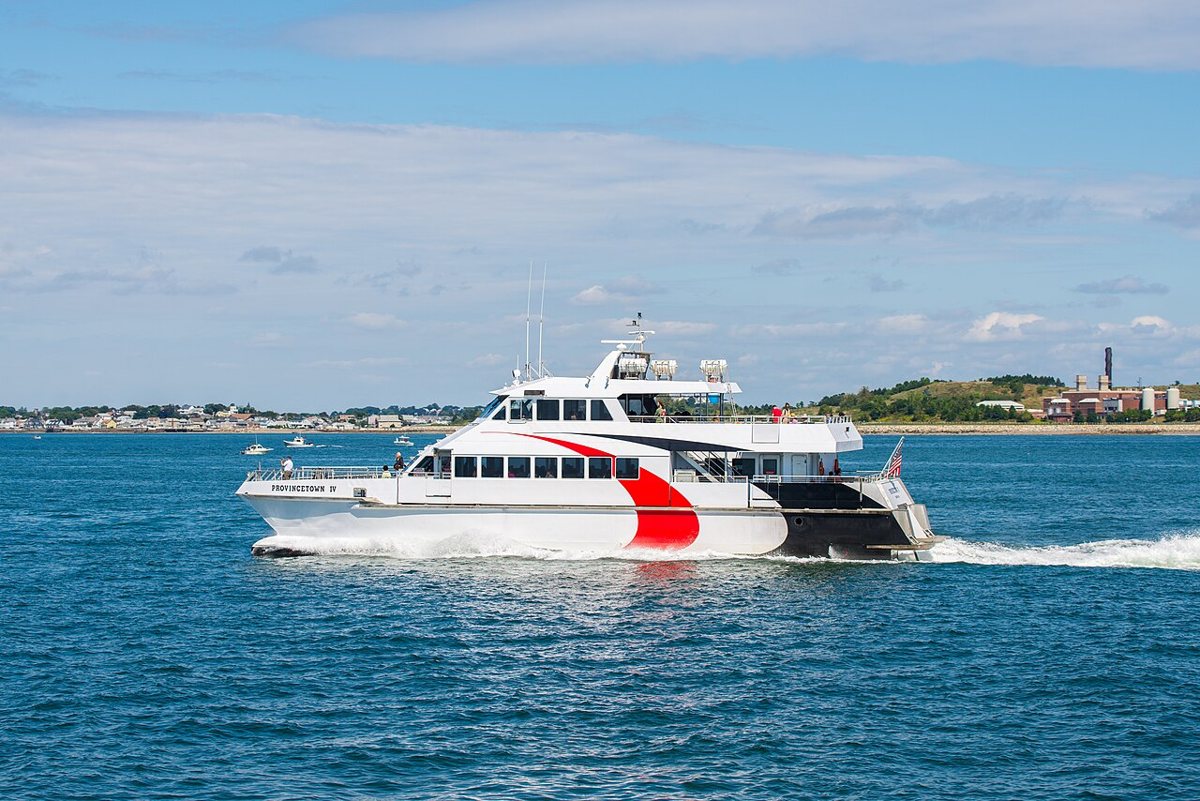
Provincetown sits at the very tip of Cape Cod, three hours by car if the Sagamore Bridge is behaving and considerably longer if it isn't, which in July it usually isn't. The better move, seasonally, is the passenger ferry that runs from Boston Harbor directly to Provincetown, cutting the trip to roughly ninety minutes each way and skipping the bridge entirely. Once there, Commercial Street is the spine of the town, lined with galleries, restaurants, and a nightlife scene unlike anywhere else on the Cape, the Pilgrim Monument offers a genuinely commanding view over the harbor and dunes, and whale watching boats leave right from MacMillan Pier for Stellwagen Bank, one of the richest whale feeding grounds on the East Coast. Herring Cove and Race Point beaches, both within the Cape Cod National Seashore, sit a short bike ride or drive from downtown and offer a genuinely different pace than Commercial Street's crowds. Insider tip: take the ferry. This is the one trip on this list where the boat beats the car by a landslide, and it turns a punishing round trip into an actual day off instead of a test of patience.

Newport, Rhode Island
Newport is about an hour and fifteen minutes to an hour and a half by car, no useful direct train, and worth every minute of the drive. The Cliff Walk, a public path running along the ocean bluffs past the backs of the Gilded Age mansions, is free and arguably better than paying admission to tour the mansions themselves if you're working with a tight budget. The Breakers and its neighbors are worth the ticket if you want the interiors, but the walk alone delivers the scale of what these families built. Add the working harbor, the sailing history, and a downtown built for wandering. Ocean Drive extends the same coastal scenery by car for those who'd rather not walk the full Cliff Walk, and the International Tennis Hall of Fame, housed in the old Newport Casino, is a genuinely interesting stop for anyone who cares about the sport's early history. Insider tip: do the Cliff Walk first thing in the morning, before the tour buses arrive and before the July heat makes the exposed sections miserable.

West Again: The Berkshires and the Mohawk Trail
This is the stretch of the list where the phrase day trip starts straining under its own weight. Be honest with yourself about it before you commit.
The Berkshires and the Mohawk Trail
The Berkshires sit two and a half to three hours west, which means a true day trip here means a 7 a.m. departure and a late return, and plenty of Bostonians reasonably turn it into an overnight instead. If you do go for the day, Tanglewood in Lenox, the Boston Symphony Orchestra's summer home, gives the trip a direct Boston connection worth noting, and MASS MoCA in North Adams fills a converted mill complex with some of the largest contemporary art installations in the country. The drive itself, particularly the stretch of the Mohawk Trail between Charlemont and North Adams with its hairpin turn and ridge views, is arguably worth doing on its own even without a stop at either destination. Nearby Stockbridge holds the Norman Rockwell Museum, and Great Barrington has become a genuine dining destination in its own right, but stacking all of it into a single day trip from Boston is where people get themselves into trouble, arriving exhausted and leaving without having actually enjoyed any single stop. Insider tip: if you're determined to make this a single day, skip Tanglewood and MASS MoCA both and just drive the Mohawk Trail in fall. You'll get more out of three unhurried hours on that road than a rushed half day split between two institutions.
North to Maine and New Hampshire
Two coastal cities, each about an hour and two hours out respectively, and each with a genuinely different personality from anything south of the New Hampshire line.
Portsmouth, New Hampshire
Portsmouth is about an hour up I-95 and punches well above its size. Strawbery Banke Museum preserves an entire waterfront neighborhood spanning several centuries of continuous settlement, Market Square anchors a genuinely good small downtown, and Prescott Park runs along the Piscataqua River with formal gardens that cost nothing to walk through. The city has also built a real brewery and restaurant scene in the last decade that gives it more to do after dark than most day-trip towns on this list. Boats leave from the downtown docks for the Isles of Shoals, a cluster of small islands straddling the Maine and New Hampshire border with their own long, strange history of fishing families, poets, and shipwrecks. Insider tip: Prescott Park in summer is free, has river views, and is a better use of an hour than most of the paid attractions downtown. Save the museum ticket for a rainy day.
Portland, Maine
Portland runs about two hours by car on I-95, or roughly two and a half hours on Amtrak's Downeaster, which departs from North Station and removes the parking problem entirely. The Old Port is the obvious draw, cobblestone streets, a working waterfront, and enough seafood shacks to settle the ongoing lobster roll argument with the neighbors for good. Portland Head Light, the most photographed lighthouse in Maine, is actually a short drive away in the neighboring town of Cape Elizabeth, not downtown itself, so don't assume you can walk there. A short ferry ride from the Old Port out to the Casco Bay islands adds an easy hour or two on the water if the weather's cooperating, and it's a good way to see the harbor from the direction the fishing boats do. Insider tip: take the Downeaster at least once. It's slower than driving but it turns the trip into two hours of coastline out the window instead of two hours of traffic behind the wheel.
Best Day Trips From Boston: Getting There and What's Free
A short, practical rundown before you commit a Saturday to any of this.
- Commuter rail covers exactly four of these trips well: Salem and Rockport/Gloucester (Newburyport/Rockport Line), Newburyport (same line, different branch), and Concord (Fitchburg Line). Portland is covered by Amtrak's Downeaster, a separate system from the MBTA. Everything else on this list requires a car.
- Leave before 9 a.m. if you're driving anywhere south toward the Cape or Rhode Island, especially between Memorial Day and Labor Day. The Sagamore and Bourne bridges back up badly by midmorning on summer weekends and stay that way until evening.
- North Shore and New Hampshire trips are far more forgiving. Route 1A, I-95, and the commuter rail lines rarely see the kind of backups the southern routes do, which is part of why they're the easiest repeat trips on this list.
- What's actually free: the Cliff Walk in Newport, Prescott Park in Portsmouth, Halibut Point's clifftop views in Rockport, the Old North Bridge and Minute Man park grounds in Concord, and most of Marblehead's Old Town streets and Fort Sewall park. Museums, mansion tours, and Old Sturbridge Village all charge admission.
- If you're doing the Berkshires or Provincetown, treat the schedule differently than the rest of this list. Both work far better with an early departure or, honestly, an overnight.
- Shoulder season, meaning May, June, September, and early October, beats summer for nearly everything on this list. Traffic thins out, parking gets easier, and towns like Rockport and Provincetown stop feeling like they're built entirely for tourists.
The Point of All This
Every one of these places gets treated, at some point, as a box to check rather than a place with its own weather and its own arguments about what it's good for. Gloucester isn't Rockport's warm-up act. Portsmouth isn't a smaller, sadder Portland. Marblehead isn't Salem's parking lot. The mistake most guides make is flattening a whole region into a single afternoon itinerary that hits four towns and remembers none of them clearly by dinner. Pick one. Maybe two if they sit on the same rail line. Spend real time in it, eat where the people who live there actually eat, talk to somebody behind a counter who isn't reading off a script, and come back to the city having actually left it, not just having driven through it with the windows up and a photo to show for it. That's the whole argument for any of this, and it's a better use of a Saturday than another lap around the Seaport.