Best Italian Restaurants in Boston Worth the Trip
The North End gets the headlines, but Boston's Italian story is longer and stranger than a single square mile.
On a Tuesday night in the North End, the line outside a red-sauce institution stretches past the fire hydrant and halfway to the corner. Nobody looks annoyed. This is the deal you accept when you come here, the same way you accept metered parking on Hanover Street that disappears by six. The neighborhood has been Boston's Italian quarter for more than a century, and it earned that reputation the hard way, through actual cooking rather than marketing.
But the best italian restaurants in boston are not all stacked into one square mile of the North End, and anyone who tells you otherwise stopped exploring sometime around 2008.
What Boston has, if you look past the tourist-adjacent stretch of Hanover and Salem, is a genuinely varied Italian food landscape: old-school red sauce that holds up, a newer wave of regional cooking that doesn't feel performative, and a handful of neighborhood spots in the South End, East Boston, and Somerville that have been doing serious work without the lines or the mythology.
The Best Italian Restaurants in Boston Start in the North End
It would be dishonest to write around the North End. The neighborhood's Italian bakeries alone justify the trip on their own terms. A sfogliatella still warm from the oven, an espresso pulled at a counter where nobody asks your name: this is the everyday texture of the place, and it has nothing to do with the tour groups. The restaurants are a different conversation, and the range is wider than the tourist map suggests.
The North End's best cooking tends toward southern Italian and Sicilian traditions: pasta with long-cooked Sunday sauces, salt cod, whole fish, cold seafood salads that arrive before anything else. The trick is not confusing a restaurant's age with its quality. Some of the oldest names deserve their reputations. Some are coasting. Locals generally know which is which, and locals generally eat earlier than the 8 p.m. crowd queuing from out of town.
If you are coming from outside the neighborhood, book ahead on weekends or arrive before six on a weeknight. Walk Hanover and Salem and the small streets between them. Pay attention to where the older residents are actually eating, not just where the line is longest.
Beyond Hanover Street: The South End and East Boston
The South End's restaurant row on Tremont Street has absorbed enough culinary ambition over the years that Italian cooking there operates in a different register than it does in the North End. Expect more northern Italian influence, more attention to wine lists, a room where the design was clearly considered. The clientele skews toward neighborhood residents rather than visitors, which tends to make the experience more relaxed even when the cooking is ambitious.
East Boston, across the harbor and ten minutes on the Blue Line, has a substantial Central American population that mostly gets discussed in terms of taquerias, but the neighborhood also keeps Italian-American family restaurants that have operated quietly for decades. They are worth seeking out. The rooms are not stylish. The food is often very good.
For anyone building a fuller picture of Italian dining across Boston's neighborhoods, East Boston is the piece most visitors skip and most locals in other neighborhoods have never visited.
Somerville and Cambridge: Regional Italian Done Seriously
The Italian cooking in Somerville and Cambridge tends to be more explicitly regional and more interested in ingredients than the North End's comfort-food anchors. This is not a criticism of either approach. They are different things.
Davis Square and Union Square in Somerville have both changed substantially over the past decade, and the restaurant culture there reflects a clientele that reads food media and has opinions about pasta shapes. The cooking at the better Italian spots in this part of the metro tends to rotate with the season, use local sourcing where it makes sense, and take the wine program seriously. The pasta is often made in-house.
Cambridge's Italian options are more scattered geographically, but the quality ceiling is high. Inman Square and Central Square both have options worth the trip from Boston proper, particularly for anyone who wants to eat Italian food that doesn't feel optimized for tourist comfort.
What to Actually Order
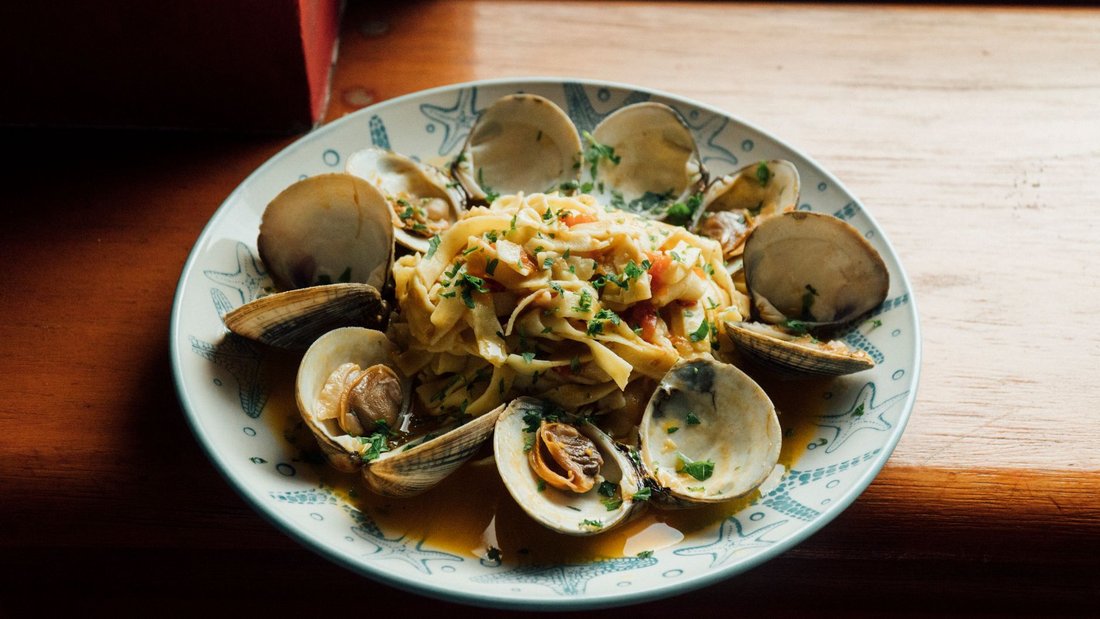
Across all of these neighborhoods, a few things hold true. Clam dishes, whether pasta alle vongole, clams casino, or stuffed quahogs that blur the line between Italian-American and New England, are almost always worth ordering in Boston, because the local shellfish supply is genuinely good. The chowder loyalty in this city runs deep for a reason, and the same logic applies to any pasta where bivalves are central.
Fresh pasta, where it's made in-house, is usually the move over dried. Tiramisu quality varies wildly, and the places that make it themselves are easy to identify because they'll tell you. Bread service in the North End is often a transaction, a basket that arrives and a charge that appears on the bill, which visitors don't always anticipate.
Skip the Caesar salad. Order the cold antipasto. Drink the house wine before you default to a bottle, because some of these places have been pouring the same reliable carafe for thirty years and have earned that trust.
How to Use This Guide
Boston's Italian food culture rewards patience and some geographic ambition. The North End is real, not just hype, but it's one chapter in a longer story. A focused guide to the North End can get you oriented before you branch out.
The most reliable signal that a restaurant is worth your time, in any of these neighborhoods, is a room full of people who live nearby. That's harder to fake than a James Beard nomination, and in this city, it means something.