Where to Eat in the North End Worth the Trip
The North End feeds tourists and locals alike, but knowing the difference between a meal worth eating and a red-checkered-tablecloth performance takes some navigation.
On a Saturday in July, Hanover Street moves like a slow river. Families with strollers, groups in matching bachelorette sashes, and sunburned tourists clutching cannoli bags from competing bakeries fill the sidewalk shoulder to shoulder. A guy in a folding chair outside his building watches it all with the particular expression of someone who has watched it for forty years. This is the North End in peak season, and it is simultaneously one of the best places in Boston to eat and one of the easiest places to waste fifty dollars on a forgettable plate of pasta.
If you are trying to figure out where to eat in the North End without surrendering your judgment entirely to Yelp stars and the line out the door, the first thing to understand is that the neighborhood's reputation is real. The second thing is that the reputation has made certain institutions lazy, because they do not need to earn your loyalty. You will come back or someone exactly like you will.
Where to Eat in the North End: Start With What the Neighborhood Actually Does Well
The North End's identity is red-sauce Italian American, and that identity is earned. Decades of immigration from southern Italy, particularly Sicily and Campania, built a culinary tradition that is specific and stubborn. The right dishes here are handmade pasta, braised meats, and whole fish prepared simply. Fresh mozzarella. Good olive oil. The neighborhood does these things at a level that most of the rest of Boston does not attempt.
What it does not do particularly well, and what some restaurants have started offering to capture tourist dollars, is anything that requires novelty. When a North End menu reads like it is trying to cover every corner of the Italian peninsula and then some, that is a sign. The places that have been cooking the same thirty things for thirty years are usually more reliable than the ones rotating seasonal specials.
The other thing the neighborhood does well, and which gets less attention than pasta, is the old-world bakery experience. Morning espresso at a counter with no seating, a sfogliatelle or a cornetto, the sound of Italian being spoken by people who are not performing it. That experience is still available if you go early and go on a weekday.
The Cannoli Situation
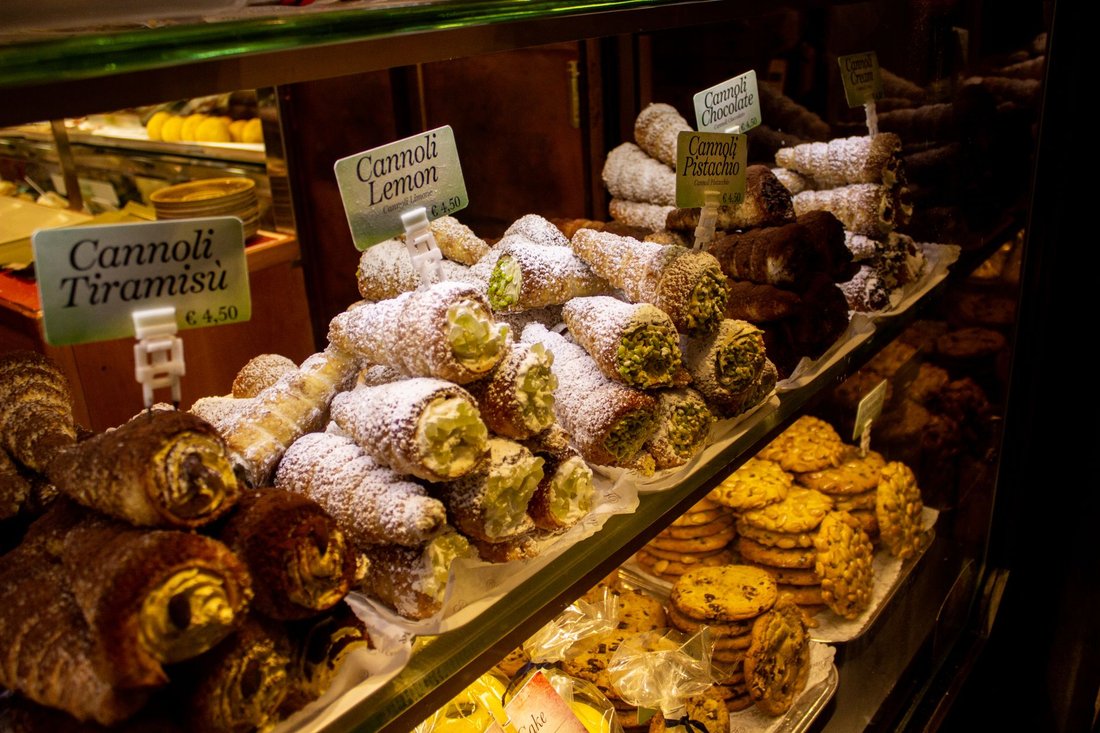
The cannoli debate is not a joke. Locals have real, firm opinions about which bakery is right, and the answer depends largely on which bakery their grandmother or their neighbor's grandmother used. The shells should be crisp, filled to order, and made with ricotta that has been drained properly. A soggy shell is an indication that they were filled in advance for volume. The rivalry between the two most prominent bakeries on the street is genuine and worth participating in, though the correct protocol is to pick a side and hold it rather than declare both acceptable, which satisfies no one.
The tourist behavior around cannoli has gotten baroque enough that the lines at peak hours are more about the photo than the pastry. Go before noon. Go in October. You will get a better cannoli and a better experience of what the neighborhood actually is.
Reading the Restaurant Side
The streets that run parallel to Hanover, particularly the residential blocks closer to the waterfront, tend to have restaurants with less foot traffic and more attention to the plate. The rule is not absolute, but Hanover Street restaurants are competing on visibility, and that changes incentives. A place tucked onto a side street is banking on return customers and word of mouth, which tends to produce better food.
Lunch is underused by visitors who spend the morning at the waterfront and then arrive at dinner expecting a table at seven on a Friday. The neighborhood's lunch scene is quieter, faster, and occasionally cheaper. A few spots that run a proper lunch service are doing some of their best cooking then, before the dinner rush.
- Order pasta over protein if you want to understand what a kitchen can do. It is harder to fake and more telling.
- Fresh fish on the menu is worth attention here in a way it might not be elsewhere. The neighborhood's proximity to the waterfront and its Italian cooking traditions mean whole fish and simple preparations appear on serious menus.
- Skip the bread basket if it arrives unasked and looks like it came from a bag. It usually did.
- Ask about the house wine before ordering from the list. Some of the older places have excellent house pours that do not appear prominently.
The Feasts Are the Real Thing
From July through August, the North End runs its Feast season, a succession of street festivals honoring the patron saints of the southern Italian regions the neighborhood's founders came from. Saint Anthony, Saint Agrippina, the Madonna del Soccorso. The streets close, the brass bands play, and the food vendors set up along the edges. Zeppole dusted with powdered sugar, sausage and peppers, fried dough in various configurations. None of it is farm-to-table. All of it is correct.
The Feasts are not a tourist attraction that happens to also be a cultural event. They are a cultural event that tourists attend. The distinction matters for how you behave and what you take from it. If you are in the city during Feast season, the answer to what to do on a summer weekend is to walk through, eat something from a vendor, and watch the procession.
What to Actually Take Away From This
The North End will feed you well if you let the neighborhood tell you what it is instead of asking it to be something else. It is an Italian American neighborhood that has been largely gentrified but retains enough of its character to mean something. The pasta is genuine. The bakeries are worth the argument. The tourist pressure is real and can be navigated with about twenty minutes of prior thought.
Go on a Tuesday. Eat lunch. Walk past the first three restaurants on Hanover. Have the cannoli filled in front of you and eat it standing on the sidewalk. That is the meal.