Best Italian in the North End You'll Actually Love
A real eater's guide to finding the best Italian in the North End — how to read the room, what to order, and why the line outside is sometimes worth it.
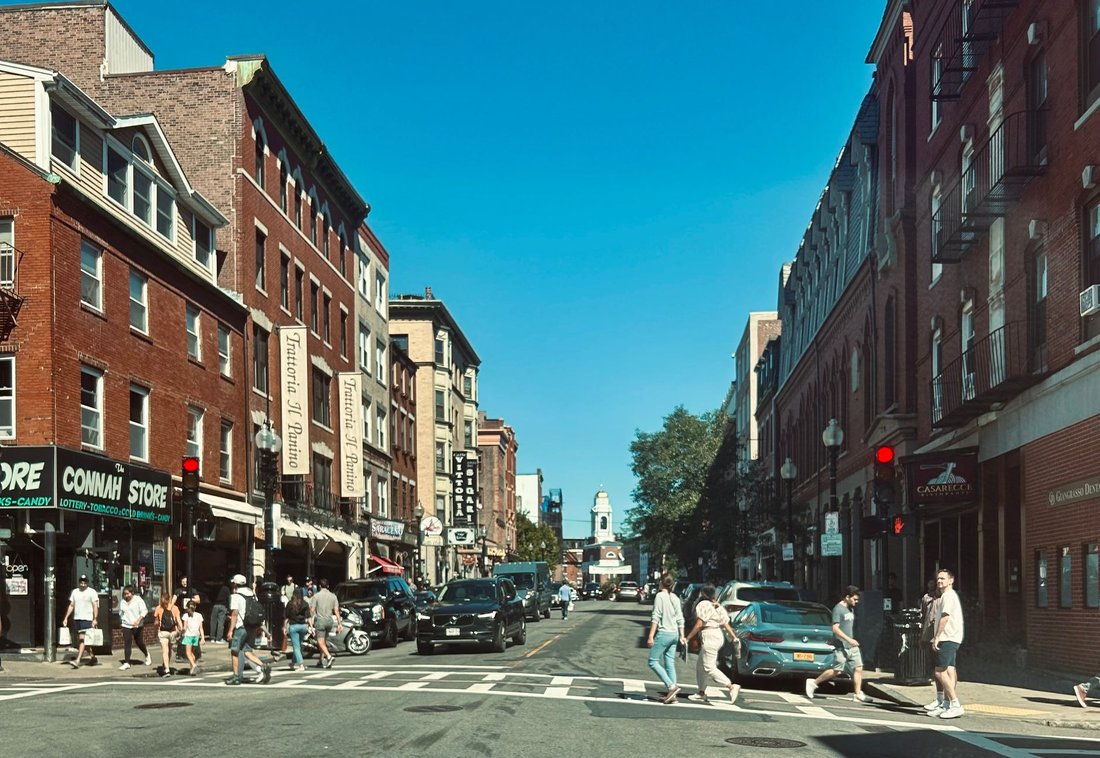
On a Saturday night in October, Hanover Street is gridlocked with people who have nowhere to be and no intention of moving. Couples clutch cannoli bags from competing bakeries like they're carrying evidence. A guy in a Patriots jersey is arguing, loudly, about which side of the street makes better espresso. This is not a performance. This is the North End operating at its natural frequency, and if you want to eat the best Italian in the North End, you need to understand that the neighborhood is not performing for you either.
The North End is the oldest residential neighborhood in Boston, and it has been Italian — deeply, stubbornly, generationally Italian, for well over a century. That matters to how you eat there. The red-sauce Sunday-gravy tradition is not an aesthetic choice; it is an inheritance. The narrow streets off Hanover, the feast processions in summer honoring patron saints, the old men playing cards in social clubs that have no signage worth noticing — these are not backdrop. They are the actual context for the food. Tourists who wander up from the Rose Kennedy Greenway and pick a restaurant because it has good lighting on Yelp are, to put it charitably, missing the point.
How to Find the Best Italian in the North End Without Getting Played
There are two categories of North End Italian restaurant, and knowing which you're walking into changes everything. The first is the old guard: cash only or cash preferred, no reservations, menus that haven't been redesigned since the Clinton administration, and a grandmother's photo somewhere near the register. The second is the newer generation: polished, reservation-friendly, wine lists with actual thought behind them, pasta that shows technique rather than tradition. Both can be excellent. Neither is automatically better. The mistake is expecting the old guard to be hip, or expecting the newer places to have soul. They're different propositions.
For the old-guard trattorias, the operating rules are simple. Arrive before 6 p.m. or after 9 p.m. if you want to avoid a wait that tests relationships. Bring cash. Do not ask for substitutions on the pasta. Order the house red without overthinking it. These places have been feeding the neighborhood and its diaspora for decades, and the regulars are not the tourists. They're the people who grew up eating this food and come back because the braised short rib tastes the way it did when their father ordered it. Sit near them if you can. Watch what they order.
The newer generation of North End Italian is a different negotiation. Reservations are available and you should use them. The menus tend toward regional Italian cooking rather than Italian-American red sauce, which means you might find dishes built around ingredients the old places would never bother with. This is not automatically pretentious. Some of it is genuinely good cooking by people who trained seriously. The tell is whether the pasta is made in-house and whether the server can actually describe what's on the plate. If they can't, adjust your expectations accordingly.
What to Order, and What to Skip
The North End does certain things at a level that is nearly impossible to argue with. Clam chowder, for one. If you're served a clear broth version anywhere in this city, send it back or walk out, those are your only dignified options. In the North End specifically, look for the cream-based chowder done without theatrics: potato, clam, a restrained hand with the salt. The seafood pasta, particularly anything built around littlenecks or mussels sourced locally, tends to be strong across the neighborhood. Veal dishes like piccata, marsala, and saltimbocca remain a reliable order at the old-school spots where the kitchen has been making them for thirty years and has nothing to prove.
What to be cautious about: tourist-facing menus that lead with chicken parmigiana at a price point that suggests they've never met a food cost. Pizza exists in the North End, but the North End is not a pizza destination — that fight belongs to other neighborhoods. And the cannoli debate is its own separate war that has nothing to do with dinner and everything to do with which bakery your family pledged allegiance to sometime around 1987.
The Feast Season Changes Everything
Come August, the North End runs the Feasts: the outdoor processions and street festivals honoring the saints, with food stalls and brass bands and crowds that make Hanover Street feel like a subway car at rush hour. Eating at a sit-down restaurant during Feast weekends is either a great idea or a terrible one depending entirely on your tolerance for noise and the specific restaurant's ability to handle volume. Some kitchens slow to a crawl. Others seem to feed off the chaos and produce better food for it. The only way to know is to ask someone who was there last year.
Outside of Feast season, late September through November is the North End at its most comfortable. The summer tourist pressure has dropped, the locals are back in their rhythms, and the restaurants are cooking for people who will return next week. That accountability produces better food. It always does.
A Few Principles Worth Keeping
- If the menu is laminated and photographed, recalibrate. You're looking at a tourist operation, not a neighborhood one.
- A line outside a place that doesn't take reservations is not automatically a sign of quality. It may just mean the room is small. Walk past, check the tables, look at what people are actually eating.
- The bread service tells you something. Bread that arrives warm with good olive oil means someone in the kitchen is paying attention to the basics. Bread that arrives as an afterthought usually means the same for the rest of the meal.
- Espresso after dinner is not optional. The espresso and dessert circuit on Hanover is the second act of a North End dinner, and skipping it because you're full is the same as leaving Fenway in the seventh inning because you've seen enough baseball.
The North End has survived urban renewal, highway construction that literally walled it off from the waterfront for decades, and every wave of food media that has tried to make it into something it isn't. What remains is a neighborhood that knows what it is. The best meal you'll have there is the one where you stopped trying to find the place with the best Instagram footprint and started asking the host at the restaurant next door where she eats on her night off. That answer, whatever it is, will probably be correct.