Back Bay Neighborhood Guide, Block by Block
Back Bay's blocks don't read the same from one alphabet street to the next, and pretending they do is how visitors miss the neighborhood residents actually live in.
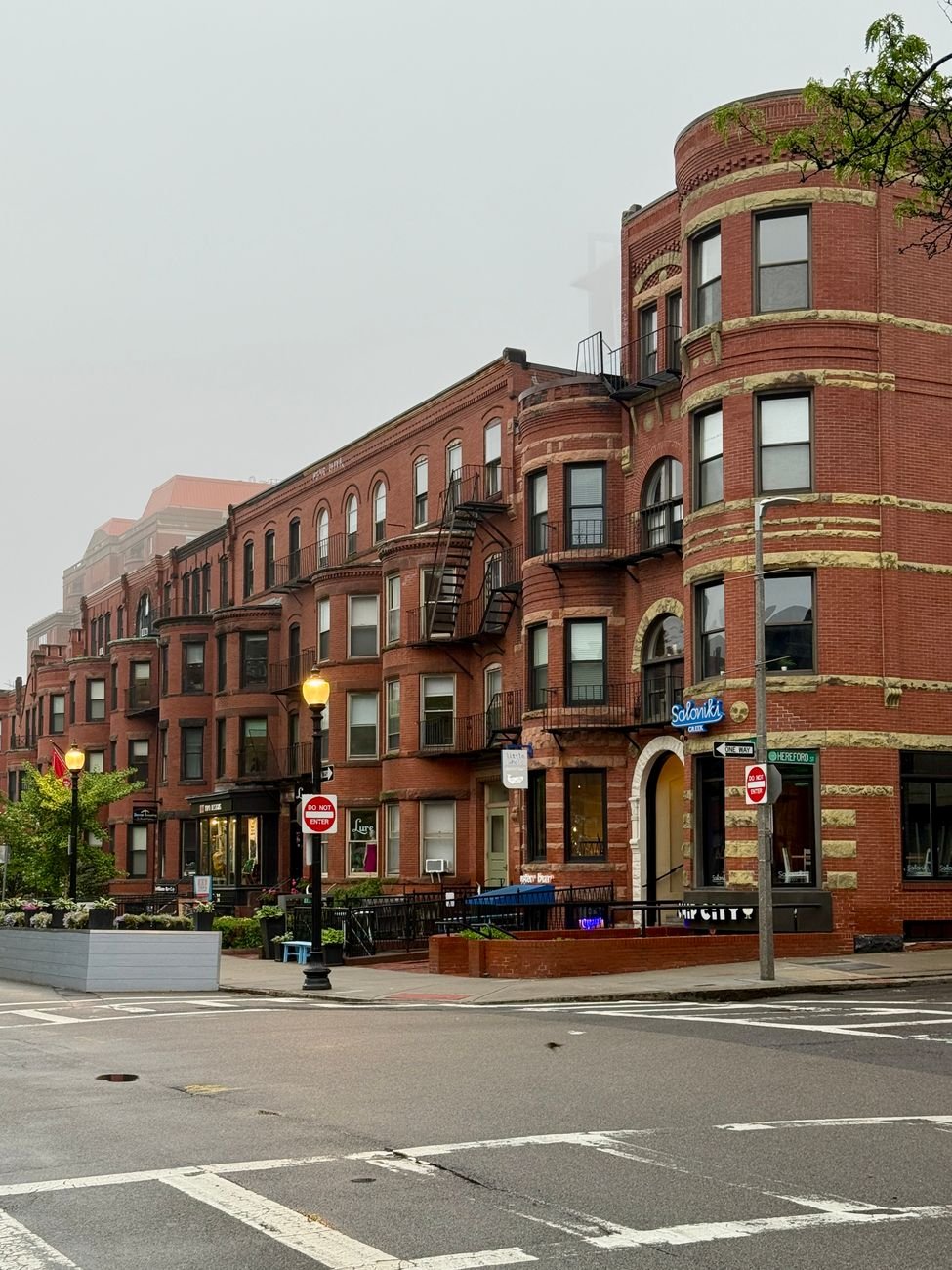
Cross Arlington Street into Back Bay around eight in the morning and the sidewalk noise changes key. Newbury Street's delivery trucks are wedged against the hydrants, boutique staff are dragging out sandwich boards, and the runners on the Commonwealth Avenue Mall cut through the trees like it's their private hallway, because for a few blocks, it kind of is. Any back bay neighborhood guide that starts with brunch menus and shop windows skips the part that actually explains the place: Back Bay is built on filled land, and its personality was set by engineers before anyone opened a storefront.
The neighborhood didn't exist before the 1850s. It was tidal flats and a stagnant mill pond, filled in over decades with gravel hauled by rail from towns west of the city, and the flat, orderly grid that resulted is the reason Back Bay looks nothing like the rest of Boston. Everywhere else in this city, streets follow old cow paths and colonial property lines. Back Bay got a plan instead: parallel avenues running from the Public Garden toward the Fens, crossed by eight streets named alphabetically, Arlington, Berkeley, Clarendon, Dartmouth, Exeter, Fairfield, Gloucester, Hereford. Locals use those cross streets as shorthand for both address and status. Ask someone how close they live to the Garden and they'll answer with a letter.
A Back Bay Neighborhood Guide to the Long Blocks
Commonwealth Avenue is the spine, a broad boulevard with the tree-lined Mall running down its center, its benches full of dog walkers and stroller traffic and older residents who seem to have claimed the same seat for years. Beacon Street runs one block north, closer to the river, quieter and less inclined to perform for anyone passing through. Marlborough Street, tucked between Beacon and Newbury, is the one actual residents point to when they want to prove Back Bay still has a soul independent of retail. It's narrow and brick-sidewalked, lined with bow-front brownstones that have not changed their facades since the Victorian era, because the neighborhood's historic district rules won't allow it.
Newbury Street runs south of Marlborough and gets most of the attention, some of it deserved. It also changes character almost block by block, which is the part outsiders miss when they park at one end and assume the whole strip is the same. Near Arlington and Berkeley, the storefronts skew toward galleries and old-money retail. By Exeter and Fairfield, it's a mix of national chains and restaurant patios that spill onto the sidewalk all summer. Push toward Hereford and Mass Ave, and Newbury loosens up, closer in spirit to the walk-up apartments and independent shops that defined the whole street before the rents climbed.
Boylston Street, Copley Square, and the Pru
Boylston Street is the workhorse of the neighborhood, running past the Prudential Center, known to anyone who grew up here simply as the Pru, and its mall of shops stacked over a transit stop that regulars navigate half by memory in the rain. Boylston is where Back Bay stops pretending to be purely residential and admits it's also a business district, with office towers and hotel lobbies feeding a lunch crowd that clears out fast once the workday ends.
Copley Square, not Boylston and not the Pru, is the neighborhood's real civic center. The Boston Public Library's research building anchors one side with a reading room worth the visit on its own, and Trinity Church sits across the square as the kind of Romanesque landmark that makes even people who don't care about architecture stop and look up. The square fills for farmers markets, for marathon finish-line crowds every spring, and for tourists trying to decide whether the library or the church deserves the longer look. Both do.
The River Side
Beacon Street's back edge opens onto the Charles River Esplanade, the long green strip that belongs to runners and cyclists, plus anyone trying to watch a free concert at the Hatch Shell from the grass instead of paying for a seat closer in. Every October the Esplanade turns into grandstand territory for the Head of the Charles, when rowers crowd the river and spectators crowd the banks for a weekend that has nothing to do with shopping and everything to do with why people who live near the water rarely move.
Where Back Bay Actually Ends
Back Bay's borders blur more than the postcard version admits. Cross Massachusetts Avenue and you're drifting toward Fenway-Kenmore, close enough that Fenway Park game nights change the foot traffic on Back Bay's own streets, and there's plenty more to do across Boston once you widen the map past these blocks. Head south past Columbus Avenue and the brownstones start looking a lot like the ones in the South End's restaurant row, because the two neighborhoods share a building style and, these days, plenty of restaurants competing over wine lists. Closer in, where to eat in Back Bay runs longer than the Newbury Street windows let on. None of that makes Back Bay less itself. It just means the neighborhood was never as sealed off as the alphabet grid makes it look on a map.
The mistake in treating any back bay neighborhood guide as one flat postcard, brownstones and boutiques and done, is that residents never experience it that way. They know it in segments: which block of Newbury still feels like a neighborhood and which one feels like an outdoor mall, which cross street means a five-minute walk to the Garden, where Marlborough goes quiet at night while Boylston never quite does. Walk it end to end, alphabet street by alphabet street, and the Back Bay that shows up has little in common with the version sold at street level to people who only came for the shopping.