Things to Do in Back Bay: The Local Guide
A walk through Boston's best-planned neighborhood, from the reading room at the library to the sailboats on the river, written by someone who has covered every block of it.
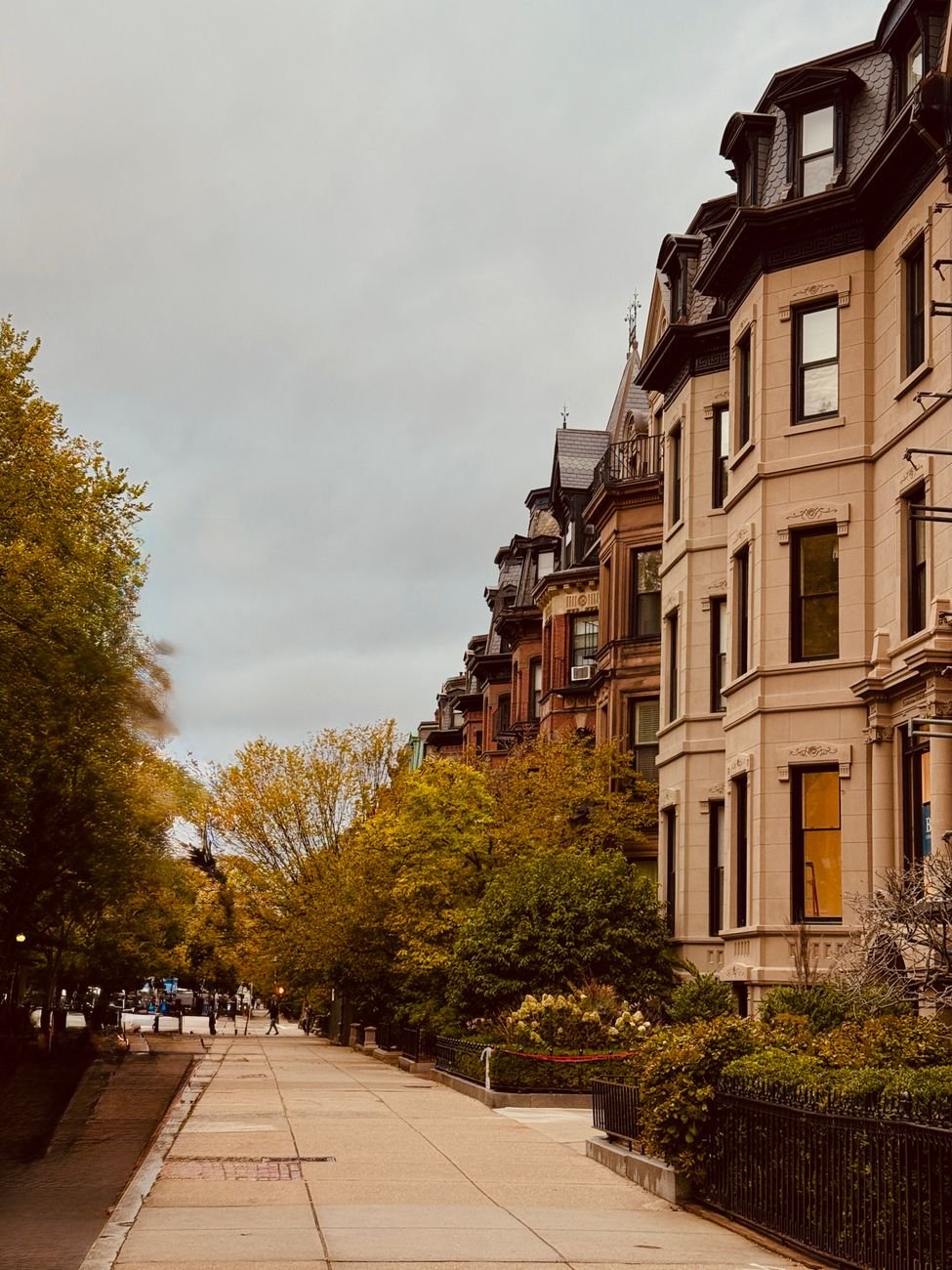
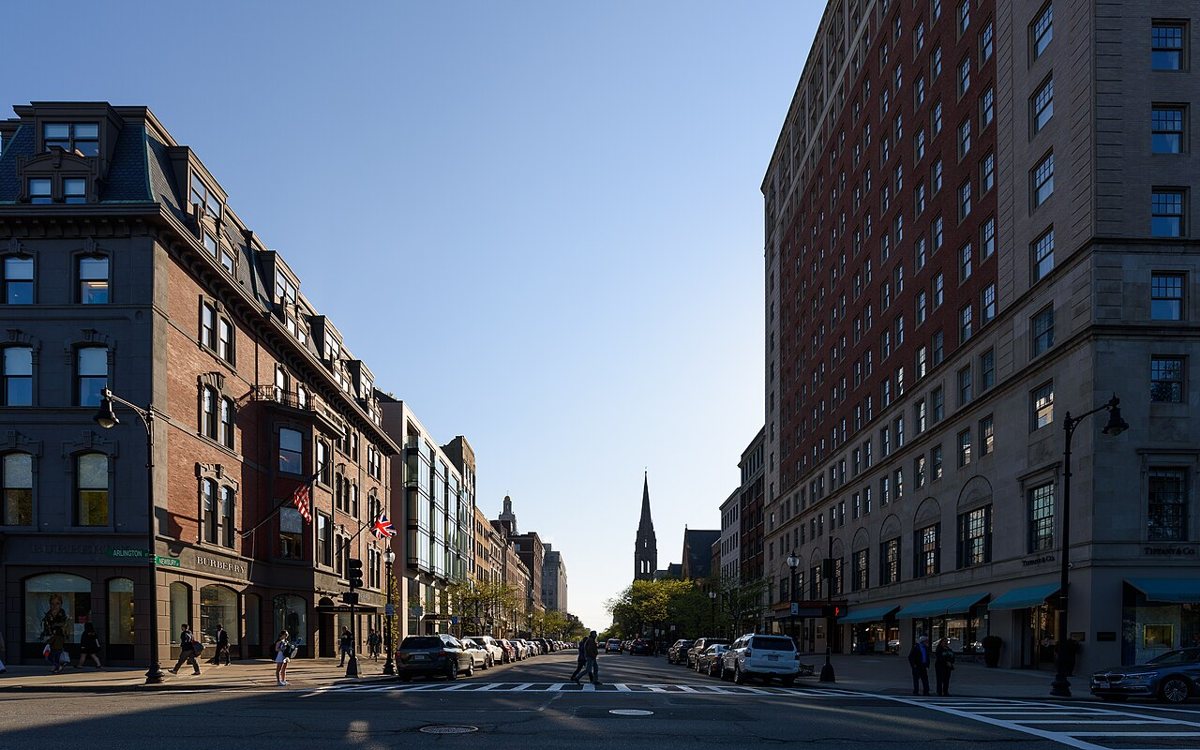
Stand at the foot of the Commonwealth Avenue Mall, where the Public Garden ends, and look west. The gravel path runs dead straight beneath old shade trees, brownstone bowfronts line both sides, and the cross streets tick past in alphabetical order: Arlington, Berkeley, Clarendon, Dartmouth, Exeter, Fairfield, Gloucester, Hereford. Nobody designed that for charm. It was a real estate and drainage project, and it happened to produce the most orderly few blocks in a famously disorderly city. This guide to things to do in Back Bay covers the grid between the library and the river, and it assumes you can walk.
How Back Bay Got Here, and Why It Walks the Way It Does
Start with the ground, because everything else follows from it. Back Bay was a tidal basin of the Charles River until the middle of the nineteenth century, when the city began filling it with gravel hauled in by rail from the hills west of town. The work took decades. What it left behind is a grid, which in Boston is close to a miracle. Commonwealth Avenue, Marlborough, Beacon, Newbury and Boylston run parallel to one another, the cross streets run alphabetically east to west, and a first-time visitor who gets lost here has usually done it on purpose.
The architecture is the other half of the story. The blocks closest to the Public Garden were built first, and the Victorian row houses of brownstone, brick and limestone carry the details that make the neighborhood photograph so well: bowed fronts, mansard roofs, stoops with iron railings, and bay windows that catch the late afternoon light. Many of these houses were carved into apartments long ago. A lot of them now hold law offices, consulates, schools and university buildings, which explains why you will see a polished brass plaque beside a doorway that looks like someone's home.
Because the neighborhood sits on filled land, buildings here have a particular relationship with groundwater. Some of the grandest structures stand on wooden piles driven deep into the old mud, and the city monitors water levels to keep those piles wet. Locals know this as trivia. Visitors should know it as a reason to look at the older buildings with a little respect.
The Essential Things to Do in Back Bay
The easiest way to organize the neighborhood is by its four natural zones: Copley Square at the center, the shopping streets and tree-lined malls running through the middle, the Prudential and Christian Science complexes on the south side, and the river on the north. The sections below follow that order, and each one can fill a morning or an afternoon on its own.
Copley Square: The Civic Heart
The Boston Public Library, McKim Building
The central library on Copley Square is a landmark in the full sense, and it is also a working library where people are quietly studying while tourists photograph the ceiling. The McKim building was designed by McKim, Mead and White and opened in the 1890s as a deliberate statement that a city could build a palace for readers. The granite facade reads like an Italian Renaissance palazzo, with arched windows and carved names of writers and thinkers running along the front. Inside, the entrance hall and the grand staircase have marble, lions, and murals by Puvis de Chavannes, and the staircase is the place to pause before going up.
The room most people come for is Bates Hall, the long reading room under a barrel-vaulted ceiling. Rows of oak tables sit under green-shaded lamps, and in the afternoon the light comes down from the tall arched windows and settles on the tables in long stripes. The room is hushed by custom, so keep your voice low and your phone quiet. The library posts current visitor guidelines, so look before you go, since access to certain areas and the schedule of art and architecture tours can change. The tours are usually free and worth the time, particularly for the murals by John Singer Sargent upstairs.
The courtyard at the center of the McKim building is the part that surprises people. Walk through the arcade and you find a quiet garden around a fountain, with a covered walkway on all four sides and chairs in the open air. It is one of the better places in the city to sit with a coffee and a book on a mild day. Bring something to read, because the courtyard rewards patience.

Trinity Church
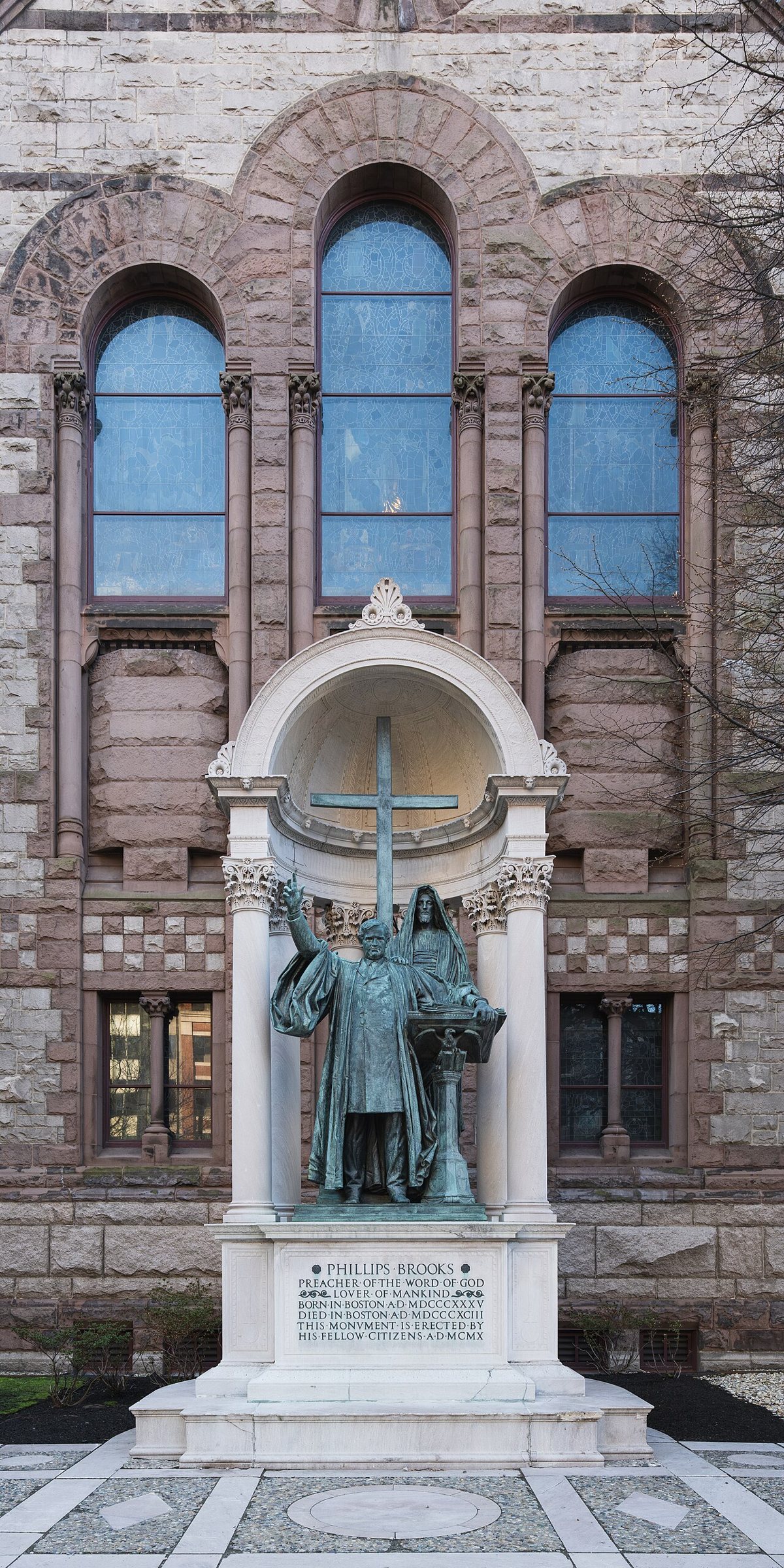
Across the square from the library stands Trinity Church, the work of H. H. Richardson and the building that gave American architecture a style of its own, usually called Richardsonian Romanesque. The heavy stonework, the squat central tower and the warm colors of granite and sandstone set it apart from the more delicate buildings around it. The church is still an active Episcopal congregation, so visits are arranged around services and events. Confirm current visiting hours and any entry arrangements before you plan around it.
The interior is the reason to go in. Murals and stained glass cover almost every surface, and much of the glass is by John La Farge and other major artists of the period. The color deepens as the sun moves. A visit in the late morning or the early afternoon is generally the best time to see it lit up. The church also runs concerts and tours, many of them worth tracking down, and the organ is a significant instrument in its own right.
The best view of the building from the outside comes from the plaza and from Boylston Street, where the glass tower beside it reflects the church back at itself in an arrangement that architecture students have photographed for decades. It is one of the stranger and better pairings in the city, a nineteenth-century church doubled in a twentieth-century mirror.

Old South Church and the Square Itself
On the other side of the square sits Old South Church, a Gothic-style building with a tall tower and an Italianate polish that makes it look slightly out of place and entirely right. The congregation traces its roots to the original Old South Meeting House downtown, and the church here has hosted a long line of public events. It is worth a look from the sidewalk even if you do not go in.
Copley Square itself is a working plaza, with a fountain, a lawn, and places to sit. A farmers market has been a regular fixture in warmer months, and food trucks tend to gather around the edges. Look at what is on before you go, because the square hosts everything from outdoor movies to demonstrations. In the evening the facades go warm, and people stay on the benches long after the shops have emptied out.
Boylston Street and the Marathon Finish
Boylston Street forms the southern edge of the square, and it is the spine of the neighborhood's commercial life. The Boston Marathon finish line is painted across the street near Copley Square, and visitors stop to stand on it and have their pictures taken. It is a plain painted line on asphalt with a great deal of feeling attached, so treat it with some respect, especially in the weeks around the race in April. The memorial nearby honors the victims of the 2013 bombing and is a quiet, dignified stop.
The rest of Boylston Street is a long run of shops, restaurants, hotels and office entrances. The stretch between Copley and the Public Garden is particularly good for walking, with one grand hotel after another and storefronts that change often. Treat it as a connector, and plan to stop where something catches your eye.

The Grid: Streets Worth Walking
Newbury Street
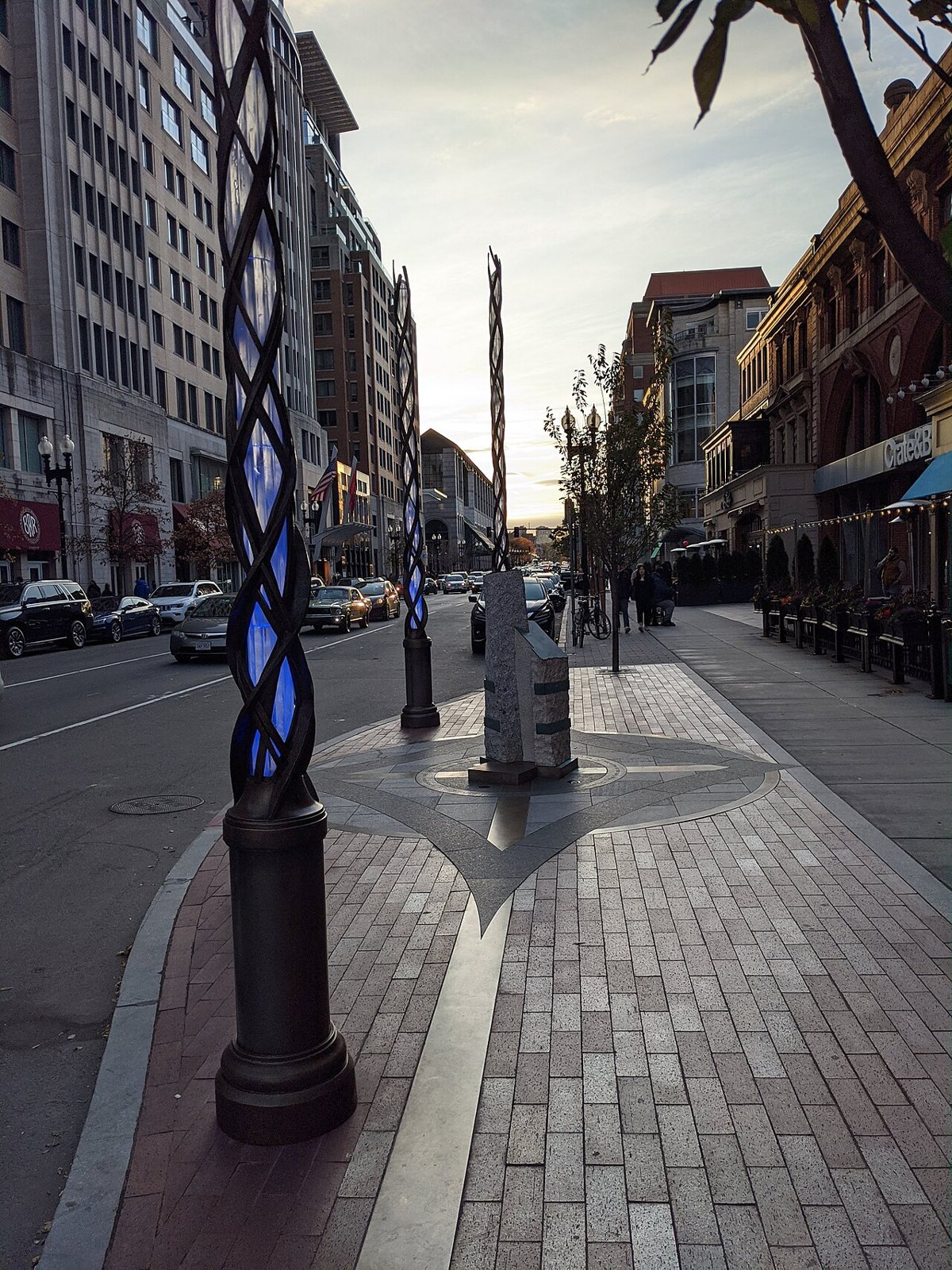
Newbury Street runs eight blocks between the Public Garden and Massachusetts Avenue, and it is the shopping street most people have heard of before they arrive. The charm is that nearly all of it sits in converted brownstones, which means you climb a stoop or descend a short flight of steps to reach a boutique, a gallery, a salon or a cafe. The east end, closest to the Garden, leans toward the high-end names and the international brands. As you move west toward Massachusetts Avenue the street becomes younger, with record shops, streetwear, vintage clothing, and the sort of independent stores that have outlasted several rounds of rent increases.
The way to do Newbury is to walk it in one direction, slowly, and to look up as well as ahead. Cornices, oriel windows and carved door surrounds are better than most of what is in the windows. Cafes with outdoor tables appear on nearly every block in warm weather, and the people-watching on a sunny Saturday is a spectator sport. For a quieter experience, go on a weekday morning, when the shops are just opening and the street belongs to dog walkers and delivery people.
There are also several galleries on the street, and a few of them have exhibitions open to the public for free. Check what is currently showing before you go. Browsing costs nothing, and the staff at the better galleries are usually happy to talk about the work.

The Commonwealth Avenue Mall
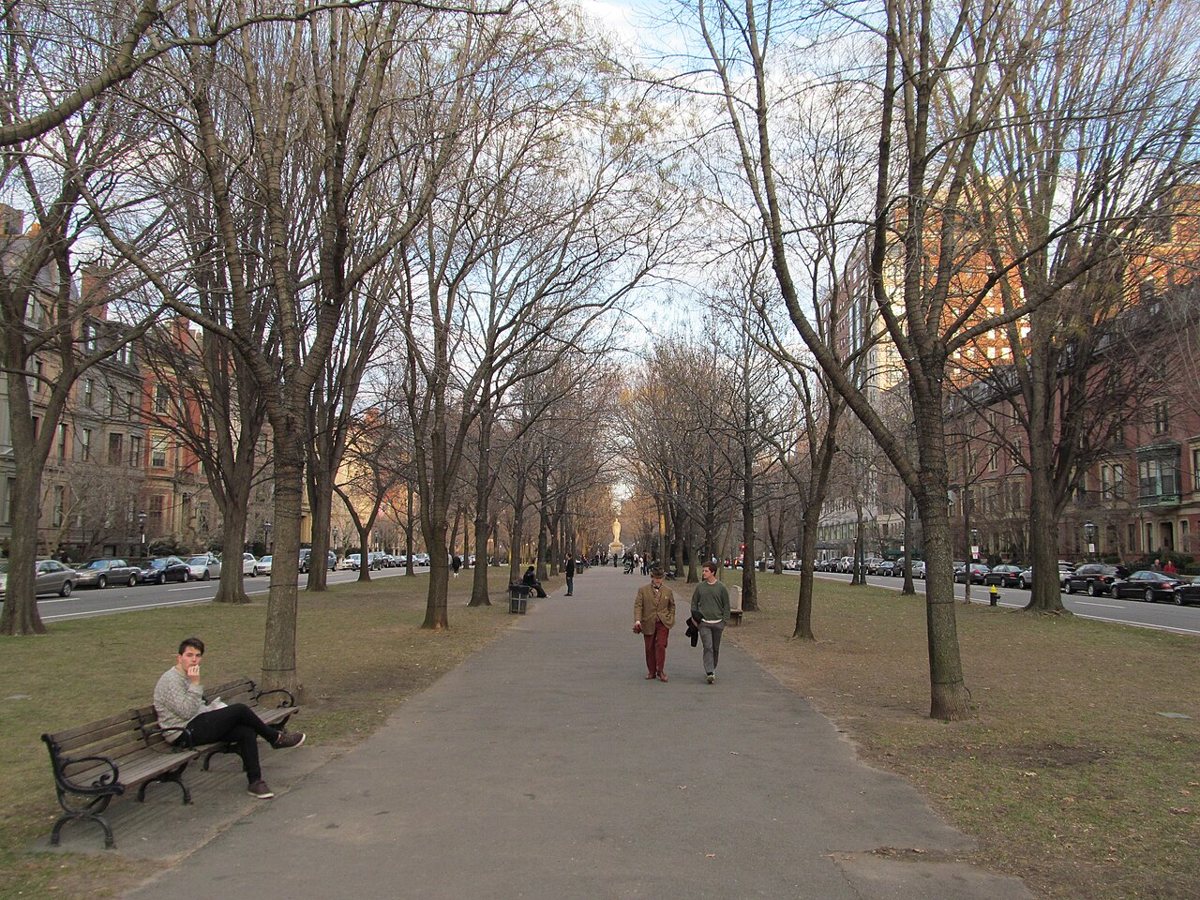
If Newbury Street is Back Bay's shop window, the Commonwealth Avenue Mall is its front lawn. The tree-lined pedestrian strip runs down the center of the avenue between the Public Garden and Kenmore Square, and the stretch within Back Bay is the most beautiful and the best kept. The broad gravel walk is shaded by mature trees, benches line the sides, and the brownstones on either side give the whole thing the feeling of a nineteenth-century European boulevard that happens to be in New England.
The Mall is also a sculpture walk, and the statues are the reason to go slowly. You will find Leif Eriksson, Alexander Hamilton, William Lloyd Garrison, the historian Samuel Eliot Morison seated in bronze, and the Boston Women's Memorial, which honors Abigail Adams, Lucy Stone and Phillis Wheatley. The women's memorial in particular is worth lingering over, since the figures are set at human scale and invite you to look closely. Walk the whole length at least once, because each block feels slightly different.
The best seasons are spring, when the magnolias along the cross streets bloom, and fall, when the leaves turn and the path is covered in gold. In winter the bare branches and the snow make a very different but equally good picture. Locals use the Mall as a daily shortcut, a jogging route and a dog park, so keep to the right and watch for leashes.

The Gibson House Museum
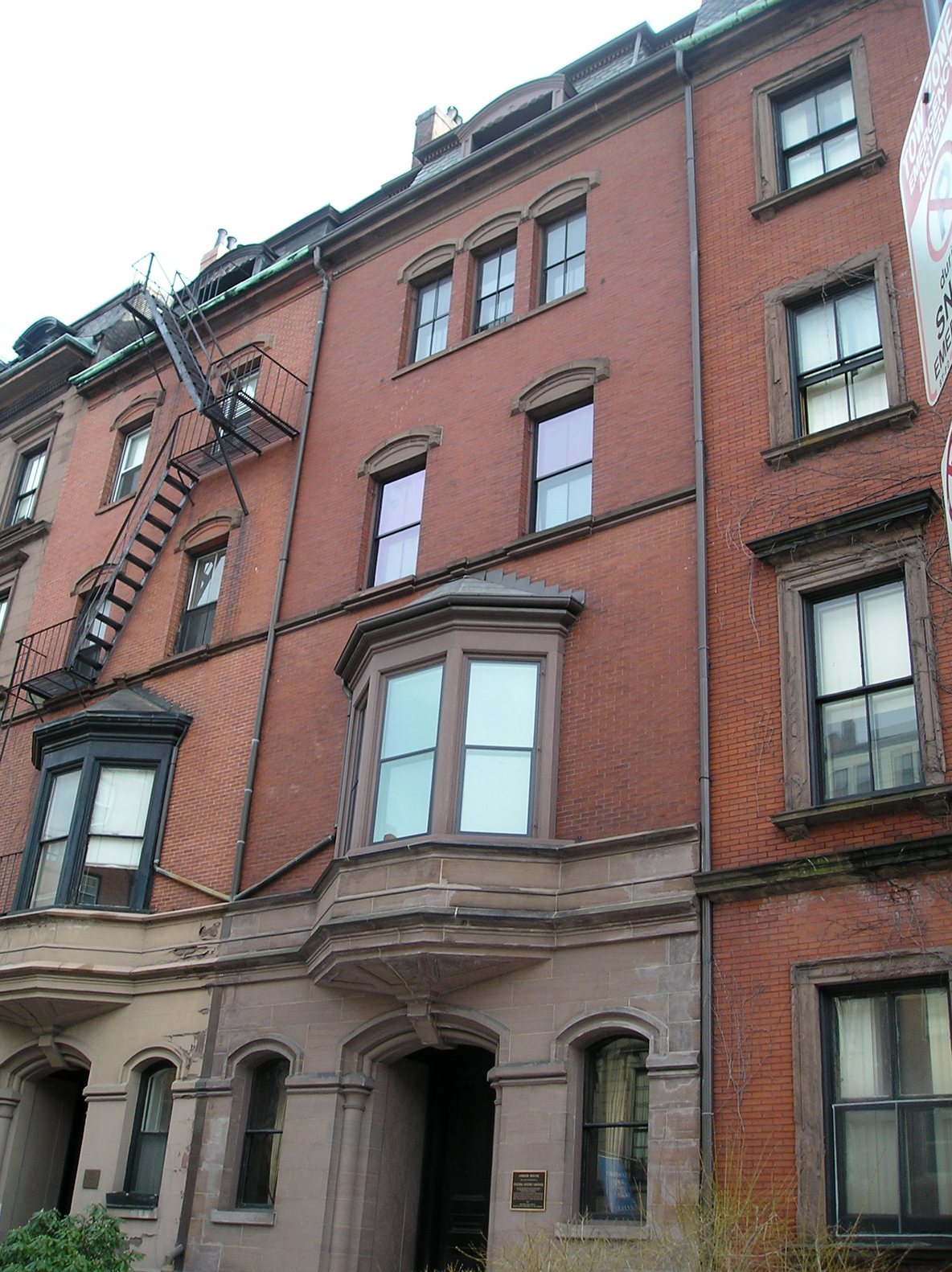
A short walk from the Mall, on Beacon Street, the Gibson House Museum is the neighborhood's best answer to the question of what these brownstones were actually like inside. It is a preserved Victorian town house, kept largely as it was when a single family lived in it for generations. The furniture, wallpaper, kitchen and servants' spaces are all intact, and the guided tour explains how a house like this ran, who worked in it, and who was never invited upstairs.
It is a small museum with limited visiting arrangements, so check the schedule and booking requirements before you go. The tour is the point, and it is the one experience in Back Bay that moves beyond the facade. When the exteriors on Beacon Street make you curious, this is where the curiosity gets paid off.

The Public Garden Edge
Strictly speaking the Public Garden belongs to the neighborhood next door, but Back Bay begins at its edge, and it makes a natural opening or closing to a day. The swan boats, the lagoon, the bridge and the bronze ducklings from the children's book are all within a few minutes of Arlington Street. Visit early or late to avoid the crowds, and take the path along the water. It is a good place to be before the bustle of Newbury Street gets going, or after it winds down.
South of the Avenue: The Prudential and the Christian Science Plaza
The Prudential Center and Its Skywalk
The Prudential Tower is the one skyscraper in Back Bay that visitors actually go up. The Skywalk Observatory sits near the top, with a full circle of windows, and on a clear day it is one of the best ways to read the shape of the city. From up there the grid of Back Bay lays itself out below like a diagram, with the long straight line of the Mall running west, the river curving along the north, and the harbor and airport to the east. Plan your visit for a clear day, check current ticketing, and go in the late afternoon if you want to see the light change.
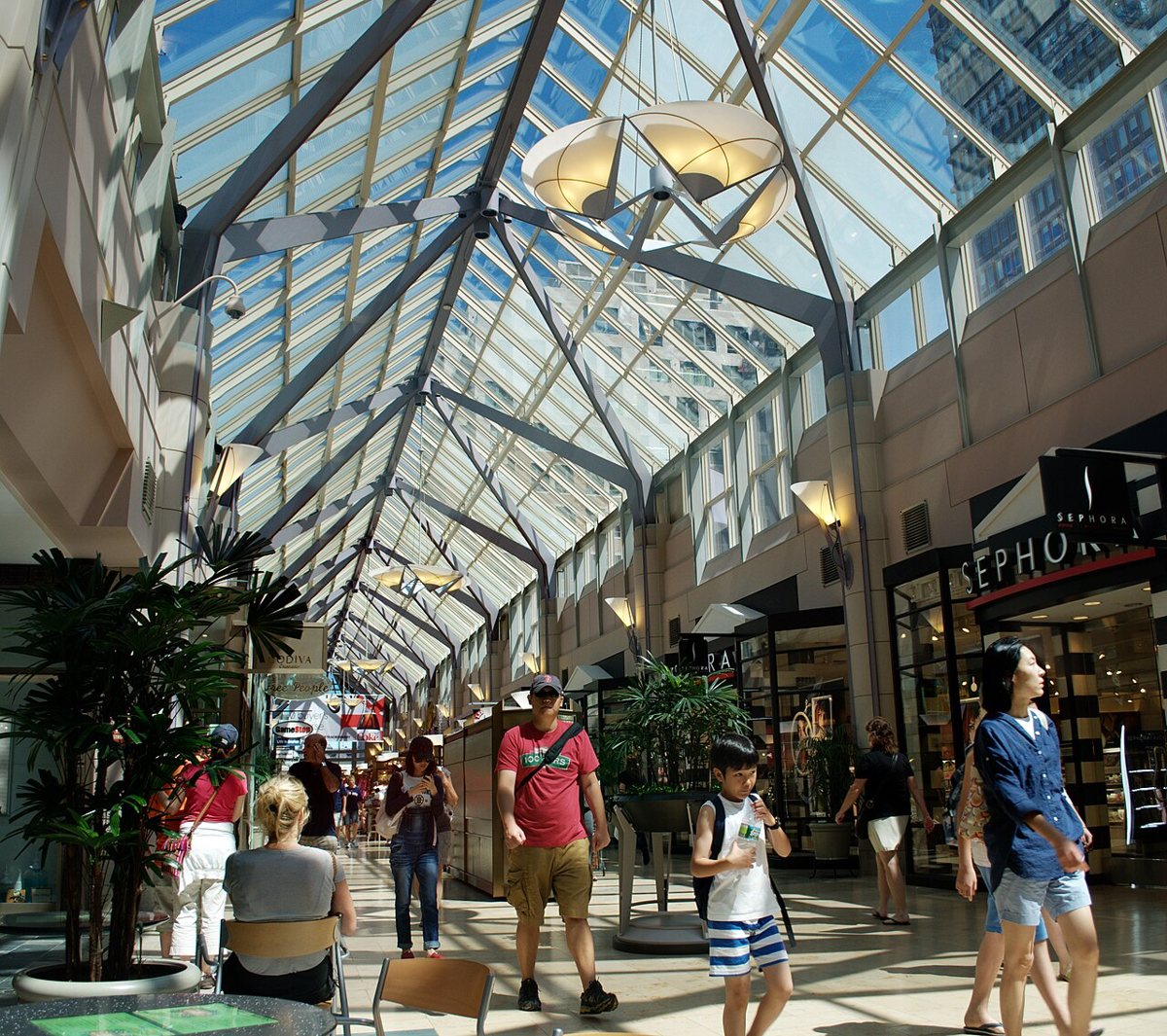
The building also has a restaurant near the top, which has been a Boston institution for decades and is a good option if you want a drink with the view. Below the tower, the Prudential Center is a shopping and dining complex linked by indoor walkways to Copley Place and other nearby buildings. Locals use those walkways as a winter shortcut, and it is a practical way to cross from one side of the neighborhood to the other when the weather turns. The links are free to walk through, and you can pass through several blocks without going outside.

Christian Science Plaza and the Reflecting Pool
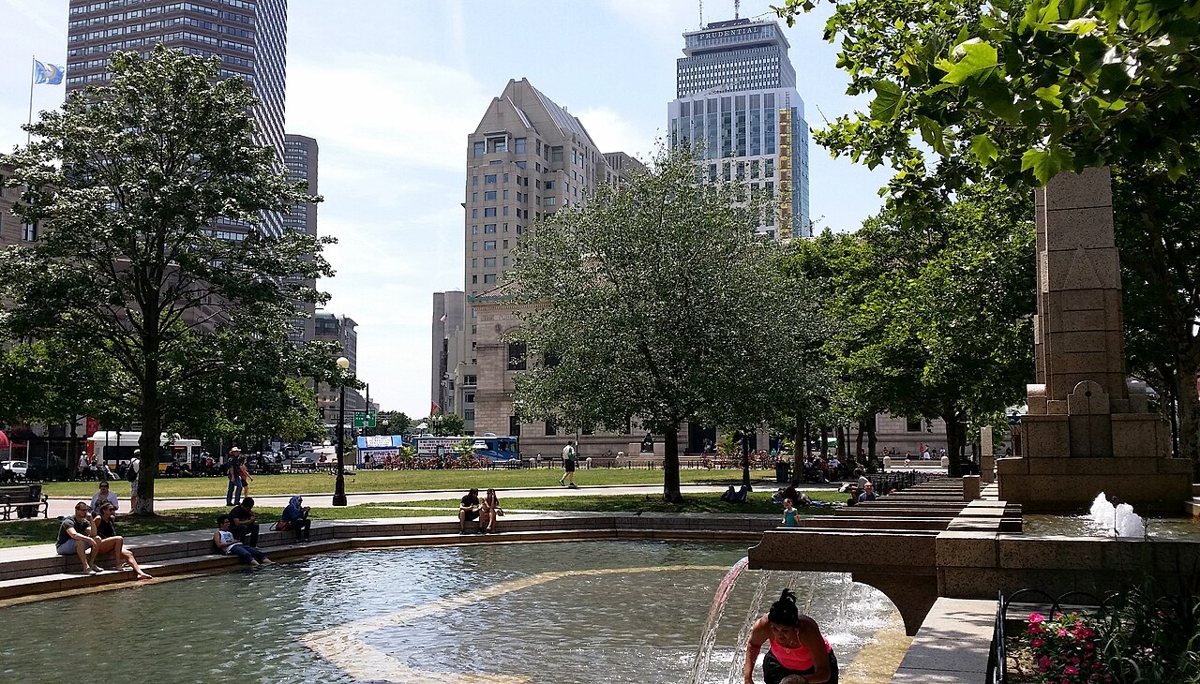
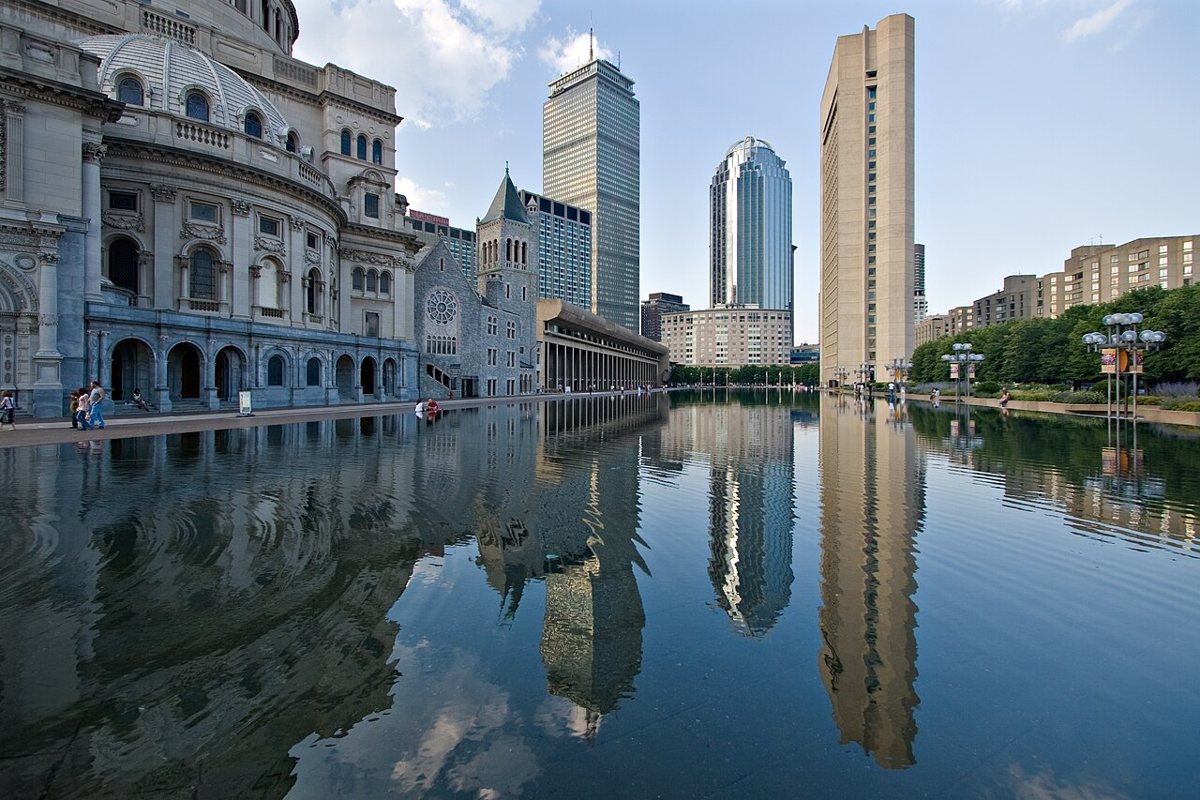
The Christian Science Plaza is one of the city's great underused public spaces. Behind the Prudential Center, a long reflecting pool stretches across a wide plaza, with the domed Mother Church and its extension at one end and a row of modern towers at the other. On a still day the pool mirrors the entire scene. It is a place people come to sit, to eat lunch, to photograph, and sometimes to wade in the shallow water with their children in summer. The fountains at the far end add a gentle sound to the whole area.
Visit on a weekday morning for the most peaceful experience, and walk all the way around the pool. The scale of the plaza only makes sense when you cross it on foot, and the angles change at each corner. The Mother Church is open to visitors under its own arrangements, so check current access if you want to see the interior.

The Mapparium
Next to the plaza, the Mary Baker Eddy Library houses the Mapparium, a three-story stained-glass globe that you walk through on a glass bridge. You are inside the world, looking out at the continents from the center, and the map reflects the political boundaries of the 1930s when it was built. That detail is part of the appeal, since it works as a time capsule as well as a piece of craftsmanship.
The globe is also an acoustic oddity. Because of the curved glass, a whisper at one end of the bridge can be heard clearly at the other, and the sound seems to come from everywhere. Staff usually demonstrate this during the visit. The experience is short, so pair it with a walk around the plaza. Confirm current visiting details, since the schedule and the exhibits in the library can change.
The River: The Charles River Esplanade
Walking and Cycling the Esplanade
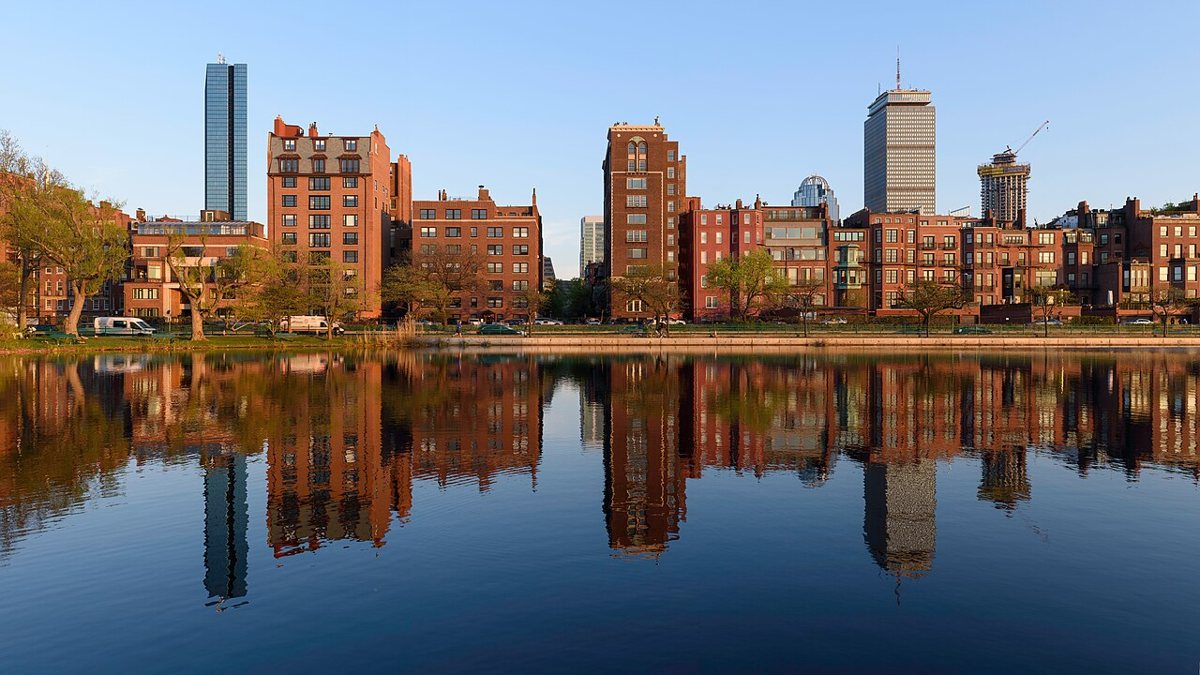
The Esplanade is the neighborhood's northern edge and its best escape. A long, narrow park runs along the south bank of the Charles, with paths for walking and cycling, lawns, benches, docks and a lagoon. It is where the neighborhood goes to run, to read, to sunbathe and to watch the sun set across the water behind the Cambridge skyline. The Arthur Fiedler Footbridge crosses Storrow Drive from Back Bay, which is the easiest way to reach the water.
The best route is a long, slow walk westward from the footbridge, following the river toward the Boston University Bridge. You will pass boats, rowers, kayakers and the occasional heron. The park is free, open to everyone, and busy on any good day. Go early on a weekend if you want it quiet, and late on a summer evening if you want the light. The skyline behind you, as the sun goes down over the river, is one of the finer free views in the city.

The Hatch Shell and the Fourth of July
The Hatch Shell is the curved bandshell on the Esplanade, and it is the home of free outdoor concerts and movie nights throughout the warm months. It is also the stage for the Boston Pops Fireworks Spectacular on July Fourth, a tradition that fills the lawn with tens of thousands of people. To see that event, plan far ahead and expect to arrive early, because the crowd is enormous and security is tight.
On an ordinary day the Hatch Shell is simply a handsome piece of civic architecture with a wide lawn in front of it. Check the event calendar for free concerts and screenings, which are some of the best bargains in the city. Bring a blanket, since people sit on the grass, and bring a jacket, since the wind off the river picks up in the evening.
Sailing on the Charles
The Charles near Back Bay is one of the more unusual sailing venues in America, a protected basin in the middle of a major city where white sails drift against the skyline. Community Boating, a long-running nonprofit on the Esplanade, offers sailing and kayaking to the public, and it has done so for generations. Check its current programs, requirements and any swim test before you plan around it. When sailing is not your thing, the dock is still a good place to sit and watch the boats come and go.
Eating and Drinking in Back Bay
Back Bay eats well, with a few caveats. The neighborhood has restaurants at every price, but the tourist-oriented places along the main drags can be expensive for what they are. Walk a block or two off Boylston or Newbury and the quality improves. Here are the Boston signatures you should know about before you sit down.
Clam chowder in Boston is white, creamy, and thick enough to hold a spoon upright. A clear broth is an insult, and a thin bowl is a warning. If you want to understand what the local standard is supposed to taste like, find a place with a real reputation and order a proper bowl of chowder, ideally with oyster crackers and a small paper cup of patience. Lobster rolls are a similar proposition. The Boston version is cold, with mayonnaise, on a buttered and toasted split-top bun, and you should be suspicious of anything that arrives warm unless it is clearly labeled as a Connecticut-style roll. The dispute over which is better is real, and the answer is a proper lobster roll, cold, as served here.
Then there is Dunkin', which in Boston is an institution rather than a chain. You will find one on a startling number of corners, and the line at the morning rush moves faster than any cafe line in the neighborhood. Order a coffee, take a donut if you like, and understand that this is what most of the people around you are doing. It is not slumming. It is the local custom, and a fair amount of Back Bay's morning traffic runs on it.
For something sit-down, the streets between Newbury and Boylston have steakhouses, Italian rooms, oyster bars and ramen counters, and most of them take reservations. Book ahead for weekends, and be willing to eat at an odd hour if you want a table in a popular place. The hotels around Copley Square also have bars that are good for a drink in a grand setting, and the old-fashioned ones with dark wood and leather are worth a visit just for the atmosphere.
Getting There, Timing, and What Costs Nothing
Back Bay is among the easiest neighborhoods in Boston to reach without a car, and driving is not recommended. The Green Line serves the area through the Arlington and Copley stations, which sit directly under or beside the places most people want to visit. The Orange Line and the commuter rail stop at Back Bay Station, which is also an Amtrak stop, and it is the easiest way to reach the Prudential Center and the south side of the neighborhood. From Back Bay Station, the Copley Square area is a short walk, and the Prudential is practically next door.
Parking exists but costs a great deal and is hard to find, and the streets are mostly resident-only. Arriving by car means using a garage and walking. Staying elsewhere in the city, the T is the sensible choice, and the neighborhood is also well connected by bus and by bike. The streets are flat, which is rare for Boston, and it is a pleasure to cover on foot.
As for timing, spring and fall are the best seasons, when the trees on the Mall and the weather along the river are both at their best. Summer is lively and sometimes hot, with the Esplanade at its busiest. Winter is cold, but the interiors of the library, the church and the Prudential Center are all excellent places to wait it out. Weekday mornings are the quietest time for the library, the churches and the Mall. Saturday afternoons are the busiest time on Newbury Street, so plan accordingly.
A surprising amount of what makes Back Bay good costs nothing. The Mall, the Esplanade, the Public Garden edge, the plaza and its reflecting pool, Copley Square, and the exterior of every landmark mentioned here are all free to walk and look at. The Boston Public Library is free to enter, and its tours are usually free. Concerts and movies at the Hatch Shell are generally free as well. Paid experiences, like the Skywalk Observatory, the Mapparium, the Gibson House and sailing, are priced separately, so check current rates and booking before you go.
A Sample Day, If You Want One
For a full day without hurry, start with coffee on the Mall and walk west to east, ending up at the Public Garden edge. Spend the late morning at the library and the church, take lunch somewhere on a side street, and spend the early afternoon on Newbury Street. Go up the Prudential in the late afternoon for the view, then cross the plaza at dusk. Finish on the Esplanade if the weather is good, or in a hotel bar if it is not.
For a shorter visit, choose between the library and church pairing, the Mall and Newbury combination, and the river. Each stands on its own. If you only have an hour, walk the Mall from the Public Garden to Massachusetts Avenue and back along Marlborough, the quiet parallel street with the best doorways in the neighborhood.
The Last Word
Back Bay gets described as a tourist neighborhood and a rich neighborhood, and both descriptions are fair and incomplete. It is also the most legible place in Boston, a piece of the city that was drawn on paper before it was built, and that still reads like the plan. The pleasure of it is not in any one attraction but in the way the pieces connect: the library facing the church, the Mall leading to the garden, the river behind the last row of houses.
Boston is more cosmopolitan than outsiders expect and more parochial than residents like to admit, and Back Bay shows both sides at once. The same sidewalk carries an international shopper, a graduate student, a retiree walking a terrier and a commuter with a Dunkin' cup. Nobody here is performing for you, which is the best thing about it. Come with comfortable shoes and no fixed plan, and let the grid do the work. The neighborhood is at its best when you stop checking the map and start looking up.