Best Food Halls in Boston, Tried and Tested
We ate our way through Boston's food halls so you don't have to gamble your lunch break, and the results say the concept works best when it stops trying to be everything at once.
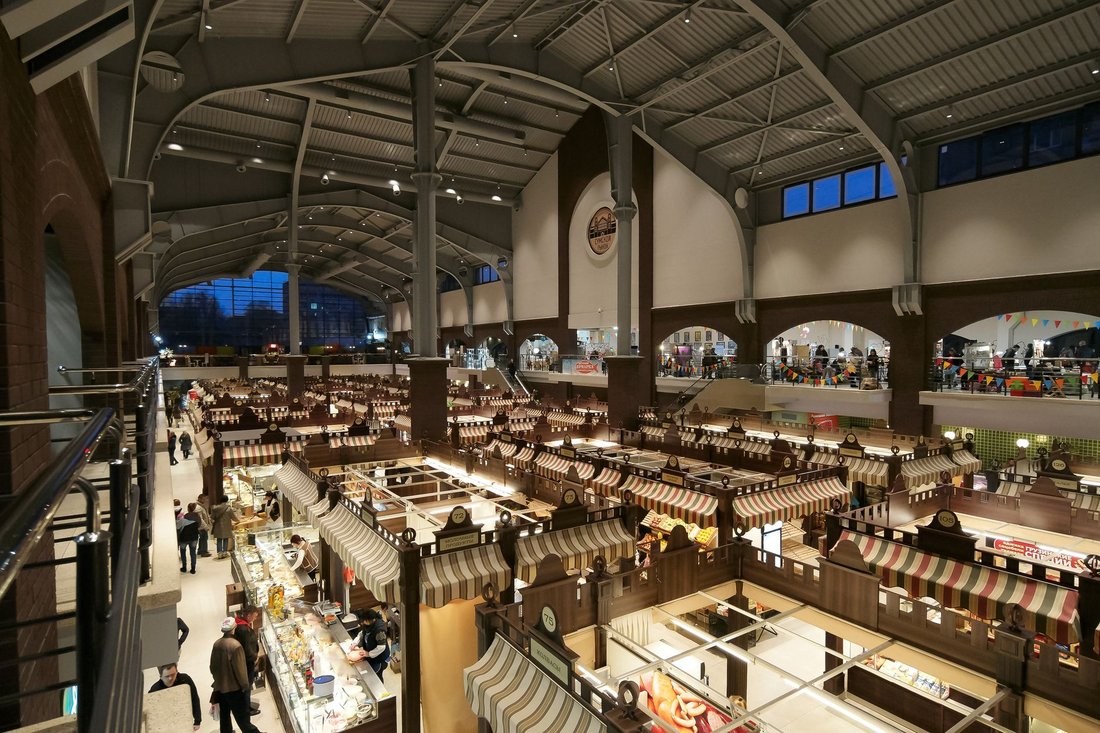
The first thing you notice at any Boston food hall on a Tuesday at 12:15 is the queue math. Six or seven counters, each with its own line, each moving at a different speed, and a room full of people doing silent calculations about which vendor will get them back to their desk fastest. This is the actual test of a food hall, more than any single dish: does the format solve a problem, or does it just multiply the number of ways you can wait.
Boston has enough of these now to compare honestly, and the search for the best food halls in Boston tends to turn up the same handful of names in different orders depending on what a person wants out of lunch. There's the market-hall model, built around vendor stalls selling groceries and prepared food side by side. There's the fully enclosed, mall-adjacent food court model, air-conditioned and predictable. And there's the outdoor-market cousin, which only really works half the year but works well when it does.
What actually makes the best food halls in Boston worth the trip
Start with the Boston Public Market, down near Haymarket and the Greenway. It's not technically a food hall in the eat-standing-up sense — it's closer to a year-round farmers market under one roof, all New England producers, no national chains. You go there to buy dinner ingredients as much as to eat lunch on the spot, and that distinction matters. If you want a hall where you sit down with a tray of hot food from four different cuisines, this isn't quite it. If you want to know what a Massachusetts strawberry tastes like in July, it is.
Time Out Market Boston, over in Fenway near the ballpark, is the opposite instinct: polished, glossy, built around a rotating cast of chefs and restaurants that already had a following before they got a stall. It's the version of a food hall a visiting friend expects, the one with the cocktail bar in the middle and enough seating that you're not fighting for a table after a game lets out. The tradeoff is price. You're paying a premium for that polish, and it shows on the check.
Downtown and the old-school option
Quincy Market, inside Faneuil Hall Marketplace, is the hall that predates the current wave by decades, and it gets dismissed by some locals as a tourist stop because of what surrounds it. That's a little unfair to the market itself, which still has a working colonnade of food stalls doing brisk, cheap, fast business at lunch. It is busy in a way that has nothing to do with charm and everything to do with foot traffic off State Street, and if you're downtown on a work lunch with twenty minutes, it still delivers. Just don't confuse the marketplace with an authentic slice of the city — that reputation belongs to the neighborhoods around it, not the plaza itself.
High Street Place, tucked into the Financial District, plays it straighter than most: fast counters, a business-lunch crowd, less spectacle. It's the hall you'd send a coworker to without a second thought, not the one you'd plan an outing around.
Somerville does its own thing
Bow Market, wedged into Union Square in Somerville, isn't a food hall in the traditional definition either, but it belongs in this conversation because it does something the downtown halls don't: mix small-batch food vendors with actual retail like record shops and a bar, all around a shared courtyard. It has the loose, neighborhood energy of Union Square itself, which means it also has real weather exposure and thinner crowds in January. Go on a mild Saturday and it's one of the better afternoons in the city. Go in a February sleet and you'll understand why locals plan around it seasonally.
The pattern across all of these: the halls that feel most Boston are the ones tied to a specific neighborhood's character rather than the ones built to feel universal. A stall slinging a proper clear-broth chowder means more inside a market with New England producers on every side of it than it would in a food court that could be anywhere. Context is doing real work in these places, even when nobody behind the counter would put it that way.
- Going with a group that can't agree on cuisine — the split-lines model exists for exactly this problem
- Wanting to sit and linger over a drink rather than eat and move — Time Out's bar setup handles that better than a market-stall format
- Shopping for dinner rather than eating lunch — the Public Market is built for that, the others aren't
- Being downtown on a tight window — Quincy Market and High Street Place both prioritize speed over atmosphere
A few honest caveats
Hours and vendor lineups shift more at these halls than at a single fixed restaurant, since stalls turn over and seasonal producers rotate through. Always check current hours before you go, especially for anything outdoors or market-style. And prices at the glossier halls run noticeably higher than a neighborhood sandwich counter would charge for the same square footage of lunch. You're paying partly for the format, not just the food.
None of this is really a knock on the concept. A food hall works when it commits to one idea instead of hedging toward all of them, which is the same rule that governs a good South End restaurant row night out or a solid neighborhood bar. The halls that try to be a market and a food court and a nightlife destination all at once tend to satisfy nobody completely. The ones that pick a lane, groceries, polished dining, neighborhood market, and do it well are the ones you go back to. Pick your lane before you pick your line.