Best Coffee Shops in Boston Worth the Trip
Boston's coffee culture runs on both a to-go Dunkin' order and a patient pour-over, and the neighborhoods that do both well are worth crossing town for.
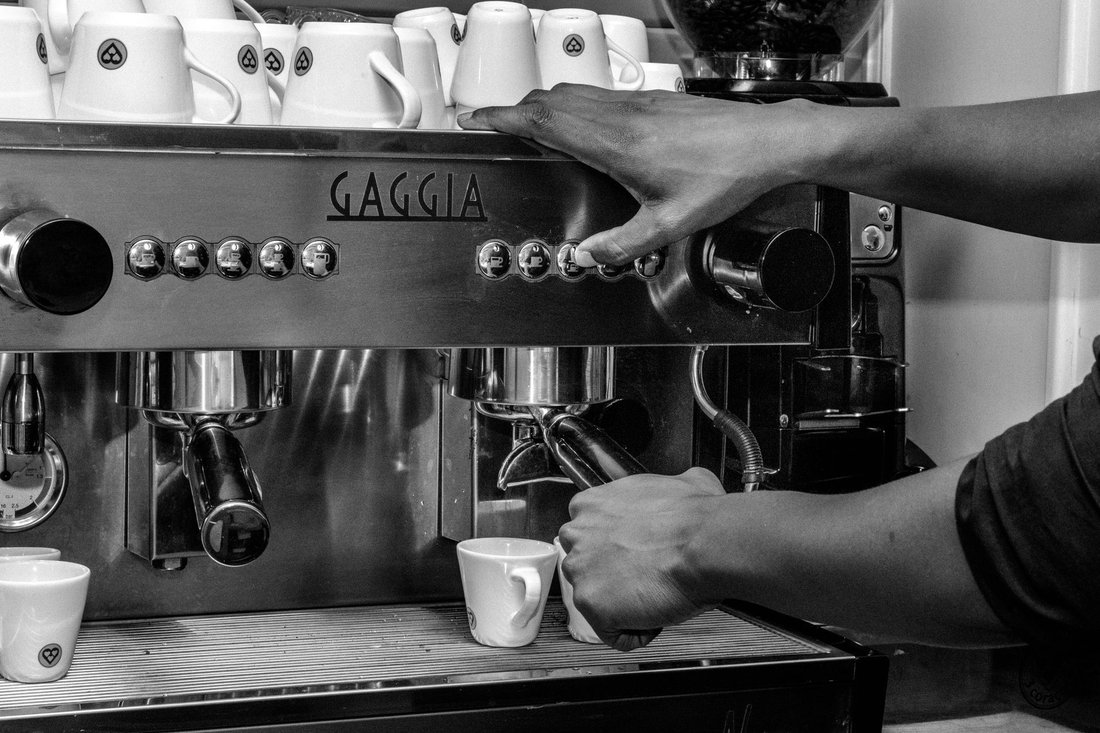
At 6:45 on a Tuesday in Davis Square, the line for drip coffee already stretches past the door, and half the people in it are guarding a laptop like it's a passport. Fifteen minutes south in Southie, somebody orders a medium regular through a drive-through window without lifting their eyes from a phone. Both of those moments are Boston coffee culture, and any list that only respects one of them isn't written by someone who actually lives here. The best coffee shops in Boston manage to hold both truths at once: they honor the Dunkin' habit wired into this city's daily rhythm while still pulling a shot that wouldn't get sent back in a roastery in Seattle.
This is a coffee town before it's a coffee-culture town, and the difference matters. Boston built its relationship with the stuff around shift work and T commutes, not around single-origin pour-overs or hand-drawn latte art. The third-wave shops that took root in Cambridge, Somerville, and the South End over the past decade didn't replace that habit. They sat down next to it, sometimes uneasily, and the city is better for having both around.
The Dunkin' Reflex, and Why It Still Runs This Town
Out-of-towners love to notice Dunkin' like they've discovered something, usually right before making a joke about it. Locals don't bother. The chain is older than most of the neighborhoods it now anchors, and it functions less like a coffee shop than a public utility. Cops drink it before a shift. Roofers drink it standing in a truck bed at 6 a.m. It asks nothing of you: no menu to decode, just a fast cup for people who have somewhere to be. A city this dependent on shift work needs an order you can place without breaking stride.
What the Dunkin' reflex explains is why Boston's serious coffee shops tend to earn customers slowly instead of through hype. A roaster opening in a neighborhood that already has three Dunkin's within a five-minute walk has to give people an actual reason to stop, not just a nicer chair and free WiFi.
Finding the Best Coffee Shops in Boston, Square by Square
Boston's coffee geography follows its neighborhood geography, which means it follows history and rent more than it follows logic. A few patterns hold up across the city.
The South End and Restaurant Row
The South End's coffee scene lives in the shadow of its restaurant reputation, which undersells it. The neighborhood's brownstone-lined blocks support some of the more polished counter service in the city, closer to a European habit of standing at the bar for a quick espresso than parking at a table for three hours. It pairs naturally with the neighborhood's food-forward identity. If you're already planning a weekend brunch table near Tremont or Washington Street, budget time before or after for a proper espresso instead of treating coffee as an afterthought to the meal.
Jamaica Plain
JP's coffee shops carry the neighborhood's older identity as much as its newer one: the mix of longtime Latino-owned businesses and artists priced out of everywhere else in the city, plus the progressive politics that show up on the community bulletin board by the door. Centre Street rewards walking over driving, and the shops that survive here tend to double as informal meeting halls rather than just counters. That fits a neighborhood that treats its restaurant scene as a point of civic pride rather than a marketing angle.
Cambridge: Harvard, Central, and Inman Squares
Cambridge is a separate city that happens to share a river view, and its coffee culture reflects that. It's more academic and more international, the kind of place where someone's reading a dissertation draft at 10 a.m. on a Wednesday. Harvard Square set the template decades ago with a campus-adjacent coffeehouse tradition that predates the current roasting boom. Central and Inman have absorbed a newer wave of shops built around single-origin beans and visible roasting equipment, for a crowd that treats a pour-over the way JP treats a good empanada: worth the wait.
Somerville: Davis and Union Squares
Somerville is the closest thing Boston has to a genuine coffee-and-craft-beer district, and Davis Square in particular has built its identity around that pairing. The Red Line brings in students and young professionals who treat a coffee shop like a second office, so the good ones here have learned to balance laptop culture with actual table turnover: communal seating, decent WiFi, but not so comfortable that nobody ever leaves. Union Square, still shaking off its industrial past, is working out a scrappier version of the same idea.
Fenway-Kenmore, Southie, and Roxbury
Fenway's coffee shops live and die by game days, which means the good ones can serve a fast, competent cup to a crowd of thirty thousand people who all need to be somewhere in twenty minutes. Southie's scene splits along the neighborhood's own fault lines, with old-school counters near the T stops and newer shops closer to the waterfront development. Roxbury, historically underserved by the citywide coffee boom, has seen a slow but real uptick in independent shops rooted in the neighborhood rather than imported to it, which is worth supporting on its own terms.
What Separates a Good Cup From a Great One
Set neighborhood loyalty aside for a second. A few things reliably separate a shop worth a special trip from one that's merely convenient.
- Beans roasted within the past two to three weeks, not sitting in a bin since spring.
- Water that's been filtered and heated properly. Most bad espresso is a plumbing problem, not a bean problem.
- Baristas trained on milk texture, not just handed a steam wand on their first shift.
- A house blend that tastes distinct from the single-origin pour-over option, proof the roaster thought about both drinkers.
- Seating that signals whether the shop wants you to linger or turn tables. Either is fine, but the mismatch is what ruins an afternoon.
How to Actually Choose
Ignore any ranking that treats this as one citywide competition. Boston doesn't work that way, and its coffee doesn't either. The right shop for a Tuesday morning meeting in the South End is the wrong one for a Sunday spent reading in Somerville. Ask what the moment actually needs, fast and reliable or slow and deliberate, then go to the neighborhood built for that need. Order accordingly, and don't apologize for switching between a to-go regular and a slow pour-over depending on the day. This city never asks you to pick a side. Don't make it choose one for you.